

Yo, what's up everyone! I'm a supplier of Titanium Washers, and today I wanna talk about a super common question: Are titanium washers compatible with other metals? It's a topic that many folks in the industry often wonder about, so let's dig into it.
First off, let's get a bit of background on titanium washers. Titanium is an amazing metal. It's lightweight, yet incredibly strong. It also has excellent corrosion resistance, which makes it a top - choice for many applications. If you're looking for some high - quality titanium washers, you can check out Titanium Washer.
Now, when it comes to compatibility with other metals, it's not a one - size - fits - all answer. There are a few key factors we need to consider.
Galvanic Corrosion
One of the biggest concerns when mixing different metals is galvanic corrosion. This happens when two dissimilar metals are in contact with each other in the presence of an electrolyte (like water or saltwater). A galvanic cell is formed, and one metal corrodes preferentially.
Titanium is a noble metal, which means it has a relatively high resistance to corrosion. When paired with less noble metals, it can cause the less noble metal to corrode. For example, if you pair a titanium washer with a steel bolt, in a moist environment, the steel bolt might start to corrode faster. The reason is that titanium has a more positive electrode potential compared to steel. In a galvanic series, metals are ranked based on their tendency to corrode when in contact with other metals. Titanium sits pretty high on this series, so it can drive the corrosion of metals below it.

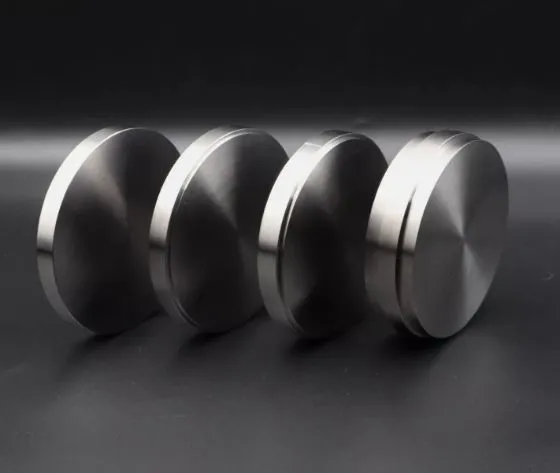
However, the situation isn't always that dire. The rate of galvanic corrosion depends on a few things. The surface area ratio of the two metals matters a lot. If the surface area of the titanium washer is much larger than the steel bolt, the corrosion of the bolt can be accelerated. On the other hand, if the surface area of the bolt is large compared to the washer, the corrosion rate might be lower.
Also, the type of electrolyte present plays a role. In a dry environment, the risk of galvanic corrosion is significantly reduced. But in a marine environment, where there's a lot of saltwater, the risk goes up.
Mechanical Compatibility
Apart from galvanic corrosion, we also need to think about mechanical compatibility. Different metals have different coefficients of thermal expansion. This means that when the temperature changes, they expand or contract at different rates.
For instance, if you use a titanium washer with an aluminum part, and the temperature rises, the aluminum might expand more than the titanium. This can lead to issues like loosening of the connection or even damage to the parts over time. So, it's important to consider the operating temperature range of the application. If the temperature varies a lot, you need to make sure that the combination of metals can handle these thermal changes without causing problems.
Chemical Compatibility
Chemicals in the environment can also affect the compatibility of titanium washers with other metals. Some chemicals might react with one metal but not the other. For example, certain acids can react with some metals more aggressively than titanium. If your application involves exposure to chemicals, you need to check the chemical resistance of both the titanium washer and the other metal.
Examples of Compatible Combinations
There are some metal combinations where titanium washers work well. One common combination is using titanium washers with stainless steel. Stainless steel also has good corrosion resistance, and when paired with titanium, the risk of galvanic corrosion is relatively low, especially in normal atmospheric conditions.
Another example is using titanium washers in a system with other titanium components. Since they're the same metal, there's no risk of galvanic corrosion between them. And if you're in the dental industry, Dental Titanium Disc can be used in combination with titanium washers for dental applications. The biocompatibility of titanium makes it a great choice for such uses.
Examples of Incompatible Combinations
As mentioned earlier, pairing titanium washers with steel in a moist environment can be a bad idea. Another incompatible combination is using titanium washers with magnesium. Magnesium is a very reactive metal, and when in contact with titanium in the presence of an electrolyte, the magnesium will corrode very quickly.
How to Mitigate Compatibility Issues
If you find yourself in a situation where you need to use a titanium washer with an incompatible metal, there are a few things you can do. One option is to use a non - conductive spacer between the two metals. This can break the electrical connection between them and prevent the formation of a galvanic cell.
You can also use coatings on the metals. For example, coating the steel bolt with a corrosion - resistant paint can reduce the risk of galvanic corrosion when paired with a titanium washer.
In some cases, you might consider using a different type of fastener or washer material altogether. For instance, if the application doesn't require the high strength of titanium, you could use a more compatible metal.
Applications of Titanium Washers
Titanium washers have a wide range of applications. In the aerospace industry, they're used because of their lightweight and high - strength properties. They can handle the extreme conditions of flight, including high temperatures and vibrations.
In the automotive industry, titanium washers can be used in high - performance engines. They help to reduce weight and improve the overall efficiency of the engine.
In the medical field, TC4 Titanium Discs and titanium washers are used in implants. The biocompatibility of titanium means that it won't cause a negative reaction in the human body.
Conclusion
So, are titanium washers compatible with other metals? Well, it depends. There are many factors to consider, including galvanic corrosion, mechanical compatibility, and chemical compatibility. While there are some combinations that work well, there are also some that can lead to problems.
If you're in the market for high - quality titanium washers or need advice on metal compatibility for your specific application, don't hesitate to reach out. Whether you're working on an aerospace project, an automotive engine, or a medical device, I can help you find the right solution. Let's have a chat and see how we can make your project a success!
References
- "Corrosion Engineering" by Fontana, M. G.
- "Materials Science and Engineering: An Introduction" by Callister, W. D.


