

Certainly, the following blog article delves into the viability of titanium retaining rings in marine applications. As a provider of high - quality Titanium Retaining Rings, my insights come from in - depth industry experience and research.
When it comes to marine applications, selecting the right materials is crucial for ensuring long - term reliability, performance, and safety. Titanium is a metal that has gained significant attention in recent years for its exceptional properties, making it a top candidate for various marine components. But can titanium retaining rings be used in marine applications? To answer this question, we first need to understand the unique characteristics of titanium and the requirements of marine environments.
Properties of Titanium
Titanium is renowned for its high strength - to - weight ratio, excellent corrosion resistance, and good biocompatibility. These properties distinguish it from many traditional materials used in marine vessels and equipment.
- High Strength - to - Weight Ratio
Titanium has a density approximately half that of steel but offers comparable strength. This property is incredibly beneficial in marine applications where weight reduction is a priority. Lighter components reduce the overall weight of the vessel, improving fuel efficiency and increasing speed. For marine structures such as submarines, reduction in weight can also affect the buoyancy and maneuverability, giving an edge in complex underwater operations. - Corrosion Resistance
The most significant advantage of titanium in a marine setting is its excellent corrosion resistance. The high chloride content in seawater makes it extremely corrosive to many metals, especially unprotected steels. Titanium forms a passive oxide layer on its surface when exposed to oxygen. This thin, adherent, and self - healing oxide film protects the metal from further corrosion. Even in highly aggressive marine environments, such as splash zones where the metal experiences intermittent wetting and drying, titanium retains its integrity over extended periods. - Biocompatibility
While not always directly relevant to most marine mechanical applications, biocompatibility can be an added advantage in certain circumstances. For example, in underwater research equipment or aquaculture facilities, where minimizing the adverse impact on marine life is important, titanium is a preferred choice.
Marine Application Requirements
Marine applications demand materials that can withstand the harsh and variable conditions of the ocean. These requirements vary depending on the specific application, but some common ones include resistance to seawater corrosion, high - impact resistance, and stability under fluctuating temperature and pressure. And of course, components need to have a long service life to reduce maintenance and replacement costs.
- Seawater Corrosion
As mentioned earlier, seawater is a highly corrosive medium due to its high salt content. Marine components like propeller shafts, rudders, and fasteners need to be protected from corrosion. If a traditional metal like steel is used without proper protection, it can develop rust, leading to reduced strength and eventually mechanical failure. - High - Impact Resistance
Marine vessels and equipment are often subject to high - impact forces. Waves, collisions with floating objects, and sudden pressure changes can cause significant stress on components. A material like titanium, with its high strength, can better withstand these impacts compared to more brittle or less robust materials. - Temperature and Pressure Variations
The ocean environment experiences significant temperature and pressure variations. From surface waters to the deep sea, temperatures can range from tropical warmth to near - freezing, while pressure can increase exponentially with depth. Materials used in marine applications must remain stable under these extreme conditions. Titanium has a relatively high melting point and good mechanical properties over a wide temperature range, which makes it suitable for such variable environments.
Using Titanium Retaining Rings in Marine Applications
Now, let's specifically focus on titanium retaining rings. Retaining rings are used to hold components in place on shafts or in bores. They are essential in many marine systems, including engine mechanisms, steering systems, and pump assemblies.
- Corrosion Resistance Benefit
In marine engines, the cooling systems are often in direct contact with seawater. Titanium retaining rings used in these systems are less likely to corrode compared to steel or aluminum rings. This ensures that the components they hold remain firmly in place, preventing leaks, misalignments, and potential mechanical failures. For example, in a seawater - cooled engine block, a titanium retaining ring can secure a seal or a gasket better over time compared to a traditional metal ring. - Weight Advantage
In steering and control systems of marine vessels, where weight reduction can lead to better responsiveness and energy efficiency, titanium retaining rings are a great option. Their lightweight nature doesn't compromise on strength, allowing for smoother and more efficient operation. - Long - Term Durability
Given the demanding nature of marine operations, the long - term durability of components is of utmost importance. Titanium retaining rings have a longer service life compared to many other materials, reducing the frequency of maintenance and replacement. This not only saves time but also cuts down on the overall cost of vessel operation.
Limitations and Considerations
While titanium retaining rings have numerous benefits, there are also some limitations and considerations to keep in mind.
- Cost
Titanium is generally more expensive than traditional metals like steel and aluminum. The cost of extraction, processing, and manufacturing titanium products can be high, which may increase the initial investment for marine projects. However, when considering the long - term savings from reduced maintenance and longer service life, the overall cost - effectiveness may still be favorable. - Machinability
Titanium is a challenging material to machine compared to some other metals. The high strength and tendency to work - harden during machining can result in slower production processes and increased tool wear. This can add to the manufacturing cost and time, but with advancements in machining technology, these challenges are becoming more manageable.
Real - World Examples of Titanium Use in Marine Applications
There are already numerous real - world examples of titanium applications in the marine industry. Naval vessels, especially high - performance ones, often use titanium components for their shafts, valves, and other critical parts. Offshore oil and gas platforms also employ titanium in pipes, heat exchangers, and other equipment exposed to seawater. These successful applications bode well for the use of titanium retaining rings in similar marine systems.
Conclusion
In conclusion, titanium retaining rings can indeed be effectively used in marine applications. Their unique properties of high strength - to - weight ratio, corrosion resistance, and long - term durability make them suitable for the harsh conditions of the ocean. Although there are some limitations such as cost and machinability, the overall benefits far outweigh the drawbacks. As a [Supplier], I offer high - quality Titanium Retaining Rings that are specifically designed to meet the demanding requirements of marine applications.
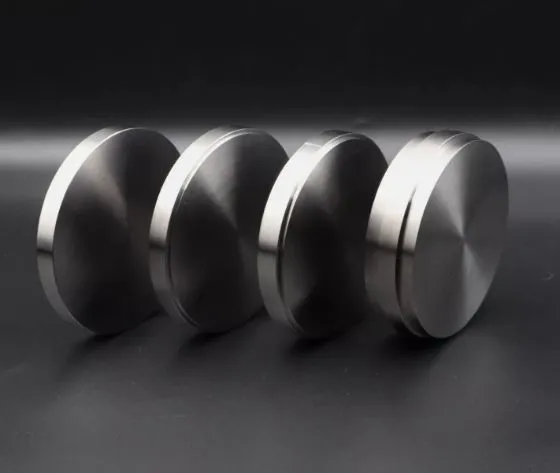
If you are involved in marine engineering, naval architecture, or any related field and are interested in exploring the use of titanium retaining rings, I encourage you to reach out. Whether you need more information, samples, or want to discuss your specific application requirements, don't hesitate to get in touch for procurement discussions. You can learn more about our other related products such as Titanium Block and Dental Titanium Disc and see if they align with your other potential needs.
References

- ASTM International. "ASTM Standards on Titanium and Titanium Alloys." ASTM, 20xx.
- Callister, W. D., & Rethwisch, D. G. "Materials Science and Engineering: An Introduction". Wiley, 20xx.
- Shipbuilder's Handbook. Various editions, offering comprehensive knowledge on ship materials and construction.


