

Ensuring the consistency of medical titanium wire quality in large - scale production is a multi - faceted challenge that requires a comprehensive approach. As a medical titanium wire supplier, I understand the critical importance of maintaining high - quality standards, especially when it comes to medical applications where patient safety is at stake.
Raw Material Selection
The journey to consistent quality begins with the selection of raw materials. Medical titanium wire is typically made from high - purity titanium alloys, such as Gr23 Titanium wire and GR2 Titanium Wire. For Gr23 Titanium wire, it is a well - known alloy in the medical field due to its excellent biocompatibility and mechanical properties. The raw titanium must be sourced from reliable suppliers who can provide detailed certificates of analysis. These certificates should verify the chemical composition, including the levels of key elements like aluminum, vanadium, and iron. Deviations in these elements can significantly impact the wire's properties, such as its strength, ductility, and corrosion resistance.
Similarly, GR2 Titanium Wire is another popular choice for medical applications. It is a commercially pure titanium with high corrosion resistance and good formability. When sourcing the raw material for GR2, we need to ensure that it meets the relevant ASTM (American Society for Testing and Materials) standards. This involves checking for the presence of impurities and ensuring that the titanium has the correct grain structure. A consistent grain structure in the raw material is crucial as it will influence the final properties of the wire after processing.
Melting and Ingot Formation
Once the raw materials are selected, the next step is melting and ingot formation. This process should be carefully controlled to ensure a homogeneous alloy. Vacuum arc remelting (VAR) is a commonly used method for melting titanium. In a VAR furnace, the titanium electrodes are melted under a vacuum to prevent contamination from oxygen, nitrogen, and other impurities. The melting process needs to be precisely controlled in terms of temperature, power input, and melting time.
During the ingot formation, the cooling rate is also a critical factor. A slow and controlled cooling rate helps to achieve a uniform grain structure in the ingot. Any irregularities in the grain structure can lead to inconsistent properties in the final wire. After the ingot is formed, it undergoes a series of quality checks, including ultrasonic testing to detect any internal defects such as porosity or cracks.
Hot and Cold Working
Hot working is an important step in the production of medical titanium wire. It typically involves processes like forging and rolling. During hot working, the ingot is heated to a specific temperature range where the titanium is more malleable. This allows for the reduction of the ingot's cross - sectional area and the formation of a billet. The hot - working temperature, deformation rate, and number of passes need to be carefully controlled.
After hot working, the billet is then subjected to cold working, which includes processes like drawing. Cold working further refines the grain structure of the titanium and increases its strength. However, excessive cold working can lead to work hardening, which may cause the wire to become brittle. Therefore, intermediate annealing steps are often required during cold working to relieve the internal stresses and restore the ductility of the wire.
Heat Treatment
Heat treatment is a crucial process for achieving the desired mechanical properties of medical titanium wire. There are different types of heat treatment processes, such as solution treatment and aging. Solution treatment involves heating the wire to a high temperature and then quenching it rapidly to dissolve any precipitates and form a single - phase structure. Aging, on the other hand, is carried out at a lower temperature for a specific period to promote the precipitation of fine particles, which can enhance the strength and hardness of the wire.
The heat - treatment parameters, including temperature, time, and cooling rate, must be precisely controlled. Even small variations in these parameters can lead to significant differences in the wire's properties. For example, if the aging temperature is too high or the aging time is too long, the precipitates may grow too large, resulting in a decrease in the wire's ductility.
Quality Control and Testing
Throughout the production process, comprehensive quality control and testing are essential to ensure the consistency of medical titanium wire quality. In - process inspections are carried out at each stage, from raw material selection to the final product. These inspections include visual inspections, dimensional measurements, and non - destructive testing methods.
Visual inspections are used to detect any surface defects such as scratches, pits, or oxidation. Dimensional measurements ensure that the wire meets the specified diameter, length, and straightness requirements. Non - destructive testing methods, such as eddy - current testing, are used to detect any internal defects or variations in the wire's electrical conductivity, which can indicate changes in the material's properties.
In addition to in - process inspections, the final product undergoes a series of end - product testing. This includes mechanical testing, such as tensile testing to determine the wire's strength and ductility, and corrosion testing to evaluate its resistance to corrosion in simulated body fluids. Chemical analysis is also performed to verify the wire's chemical composition and ensure that it meets the relevant medical standards.
Traceability and Documentation
Maintaining traceability throughout the production process is crucial for ensuring the consistency of medical titanium wire quality. Each batch of wire should be assigned a unique identification number, and detailed records should be kept for every step of the production process. This includes information about the raw material source, melting parameters, working processes, heat - treatment conditions, and quality - control test results.
In case of any quality issues or recalls, the traceability system allows for quick identification of the root cause and the affected batches. Documentation also plays an important role in meeting regulatory requirements. Medical titanium wire must comply with various international standards, such as ISO 13485 (Medical devices - Quality management systems - Requirements for regulatory purposes).
Comparison with Aerospace Titanium Wire
It is interesting to note the differences and similarities between medical titanium wire and Titanium Wire for Aerospace. Both applications require high - quality titanium wire, but the specific requirements may vary. Aerospace applications often demand extremely high strength - to - weight ratios and excellent fatigue resistance. Medical applications, on the other hand, prioritize biocompatibility and corrosion resistance in the human body.
However, many of the production processes and quality - control measures are similar. For example, both medical and aerospace titanium wire production require strict control over raw material selection, melting, and working processes. The need for traceability and documentation is also common in both industries to ensure the safety and reliability of the products.
Conclusion
Ensuring the consistency of medical titanium wire quality in large - scale production is a complex but achievable goal. It requires a combination of careful raw material selection, precise control of production processes, comprehensive quality control and testing, and effective traceability and documentation. By adhering to these principles, we can produce medical titanium wire that meets the highest standards of quality and reliability.
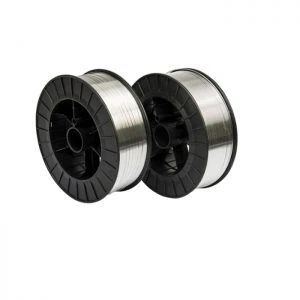

If you are in the market for high - quality medical titanium wire, I invite you to reach out to discuss your specific requirements. We are committed to providing the best products and services to meet your needs.
References
- ASTM International standards for titanium alloys
- ISO 13485:2016 Medical devices - Quality management systems - Requirements for regulatory purposes
- Textbooks on titanium metallurgy and materials science


