

As a leading supplier of titanium wire for aerospace applications, I understand the critical importance of weldability in this high - stakes industry. Titanium is renowned for its exceptional strength - to - weight ratio, corrosion resistance, and high - temperature performance, making it an ideal material for aerospace components. However, welding titanium wire can be a challenging process due to its unique properties. In this blog, I'll share some insights and strategies on how to improve the weldability of titanium wire for aerospace.
Understanding the Challenges of Welding Titanium Wire
Titanium has a high affinity for oxygen, nitrogen, and hydrogen at elevated temperatures. When titanium is welded, these elements can react with the molten metal, forming brittle compounds that can significantly reduce the mechanical properties of the weld. Additionally, titanium has a relatively low thermal conductivity, which means that heat can build up quickly during welding, leading to distortion and residual stresses.
Another challenge is the presence of surface contaminants. Titanium surfaces can easily pick up dirt, oil, and oxides, which can interfere with the welding process and cause defects in the weld. Therefore, proper surface preparation is crucial to ensure good weldability.
Surface Preparation
One of the most important steps in improving the weldability of titanium wire is thorough surface preparation. Before welding, the titanium wire should be cleaned to remove any surface contaminants. This can be done using a combination of mechanical and chemical methods.
Mechanical cleaning involves using abrasive materials such as sandpaper or wire brushes to remove loose dirt and oxides from the surface of the wire. However, care must be taken not to scratch the surface, as scratches can act as stress concentrators and reduce the fatigue life of the weld.
Chemical cleaning is often more effective in removing stubborn contaminants. A common method is to use a solution of nitric acid and hydrofluoric acid to etch the surface of the titanium wire. This not only removes oxides but also creates a clean, active surface that promotes good wetting during welding. After chemical cleaning, the wire should be thoroughly rinsed with water and dried to prevent the formation of new oxides.
Welding Environment
The welding environment plays a crucial role in the quality of the weld. Titanium should be welded in an inert gas atmosphere to prevent the reaction of the molten metal with oxygen, nitrogen, and hydrogen. Argon is the most commonly used shielding gas for titanium welding because it is inert and has good thermal conductivity.
The shielding gas should be of high purity, typically 99.99% or higher. Impurities in the shielding gas can react with the titanium and cause defects in the weld. Additionally, the flow rate of the shielding gas should be carefully controlled to ensure adequate coverage of the weld pool. A flow rate of 15 - 25 liters per minute is usually sufficient for most titanium welding applications.
In addition to the shielding gas, the welding area should be kept clean and free from drafts. Drafts can disrupt the shielding gas flow and allow oxygen and other contaminants to enter the weld pool. Therefore, it is recommended to weld in a closed or semi - closed environment.
Welding Parameters
Selecting the appropriate welding parameters is essential for achieving good weldability. The welding parameters include the welding current, voltage, travel speed, and electrode size.
The welding current should be adjusted based on the diameter of the titanium wire and the type of welding process. Generally, a higher current is required for thicker wires. However, too high a current can cause excessive heat input, leading to distortion and porosity in the weld.
The voltage should be set to maintain a stable arc. A stable arc is necessary for consistent weld quality. The travel speed of the welding torch also affects the heat input and the quality of the weld. A slow travel speed can result in excessive heat input, while a fast travel speed can cause incomplete fusion.
The electrode size should be selected based on the thickness of the titanium wire and the welding current. A smaller electrode is suitable for thinner wires, while a larger electrode can be used for thicker wires.
Use of Appropriate Filler Materials
In some cases, using a filler material can improve the weldability of titanium wire. The filler material should have similar chemical composition and mechanical properties to the base metal.
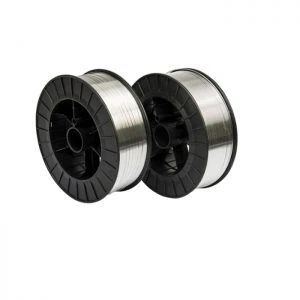
For aerospace applications, Gr23 Titanium wire is a popular choice as a filler material. It has excellent strength and corrosion resistance, making it suitable for joining titanium components in high - stress environments. GR1 Titanium Wire Rod is also a good option for applications where high purity and good formability are required. Pure Titanium Welding Wire can be used when the base metal is pure titanium.
The filler wire should be cleaned and prepared in the same way as the base metal to ensure good compatibility and weld quality.
Post - Weld Heat Treatment
Post - weld heat treatment can be used to improve the mechanical properties of the weld and reduce residual stresses. For titanium welds, a stress - relieving heat treatment is often recommended. This involves heating the welded component to a specific temperature and holding it for a certain period of time, followed by slow cooling.
The stress - relieving temperature and time depend on the type of titanium alloy and the thickness of the welded component. Generally, the temperature ranges from 550 - 700°C, and the holding time is 1 - 4 hours. After heat treatment, the component should be inspected for any signs of cracking or distortion.
Quality Control
Quality control is an integral part of the welding process. Non - destructive testing methods such as X - ray, ultrasonic testing, and dye penetrant testing can be used to detect internal and surface defects in the weld. Visual inspection is also important to check for any obvious defects such as porosity, cracks, or incomplete fusion.
In addition to testing the weld itself, the quality of the welding equipment and materials should also be monitored. Regular maintenance of the welding machine and gas delivery system is necessary to ensure consistent performance. The quality of the shielding gas and filler materials should be verified before use.
Conclusion
Improving the weldability of titanium wire for aerospace applications requires a comprehensive approach that includes proper surface preparation, control of the welding environment, selection of appropriate welding parameters, use of suitable filler materials, post - weld heat treatment, and strict quality control. By following these guidelines, we can ensure high - quality welds that meet the stringent requirements of the aerospace industry.
If you are in the aerospace industry and are looking for high - quality titanium wire with excellent weldability, we are here to help. Our company specializes in providing a wide range of titanium wire products, including Gr23 Titanium wire, GR1 Titanium Wire Rod, and Pure Titanium Welding Wire. We have extensive experience in the aerospace field and can offer professional advice and solutions to meet your specific needs. Contact us today to start a procurement negotiation and take your aerospace projects to the next level.

References
- "Titanium: A Technical Guide" by John C. Williams
- "Welding Metallurgy" by John C. Lippold and David K. Miller
- "Aerospace Materials and Processes" by Robert C. Reed - Hill and Robert E. Smallman


