

Hey there! As a titanium plate supplier, I often get asked about the density of titanium plates. It's a crucial aspect, whether you're in the aerospace industry, medical field, or any other sector that relies on these high - performance materials. So, let's dive right in and explore what the density of titanium plates is all about.
First off, let's understand what density means. Density is basically how much mass is packed into a given volume. In the case of titanium plates, it tells us how heavy a certain size of the plate will be. Titanium is well - known for its high strength - to - weight ratio, which is one of the reasons it's so popular in various industries.
The density of pure titanium is approximately 4.506 g/cm³. This value can vary slightly depending on factors like the purity of the titanium and the manufacturing process. When we talk about different grades of titanium plates, the density can change a bit due to the presence of alloying elements.
Let's take a look at some common types of titanium plates and their densities.
ASTM B265 Gr2 Titanium Plate
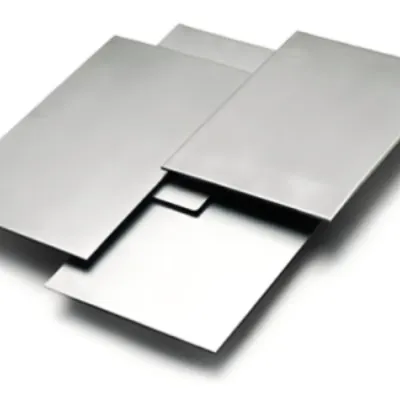
The ASTM B265 Gr2 Titanium Plate is a commercially pure titanium grade. It has excellent corrosion resistance and is widely used in applications where corrosion is a concern, such as in the chemical processing industry. The density of ASTM B265 Gr2 titanium plate is close to that of pure titanium, around 4.51 g/cm³. This grade contains a small amount of iron and oxygen, which can cause a very slight increase in density compared to absolutely pure titanium.
TA1 Pure Titanium Plate
The TA1 Pure Titanium Plate is another type of pure titanium product. It's often used in the aerospace and marine industries because of its good mechanical properties and corrosion resistance. The density of TA1 pure titanium plate is also in the ballpark of 4.5 g/cm³. Since it's a pure titanium grade, the density is very close to the theoretical value of pure titanium.
TC4 Titanium Industrial Plate
The TC4 Titanium Industrial Plate is an alloyed titanium plate. TC4 is also known as Ti - 6Al - 4V, which means it contains 6% aluminum and 4% vanadium as alloying elements. These alloying elements change the properties of the titanium, including its density. The density of TC4 titanium industrial plate is around 4.43 g/cm³. The presence of aluminum, which is a lighter element compared to titanium, reduces the overall density of the alloy.
Now, you might be wondering why the density of titanium plates matters. Well, in industries like aerospace, every gram counts. A lower - density material can help reduce the weight of an aircraft, which in turn can lead to better fuel efficiency and performance. In the medical field, the density of titanium plates used in implants is important because it affects how the implant interacts with the surrounding tissues.
When it comes to manufacturing, the density of titanium plates also plays a role. For example, if you're cutting or machining a titanium plate, knowing its density can help you estimate the weight of the final product and the amount of material that will be removed during the process.
Another factor to consider is the cost. Titanium is generally more expensive than other metals, and the weight of the plate (which is related to its density) directly impacts the cost. So, understanding the density can help you make more cost - effective decisions when purchasing titanium plates.
If you're in the market for titanium plates, you need to think about the specific requirements of your project. Do you need a high - strength alloy like TC4, or is a pure titanium grade like ASTM B265 Gr2 or TA1 sufficient? The density can be a key factor in this decision - making process.
I've been in the titanium plate supply business for a while, and I can tell you that getting the right product for your needs is crucial. We have a wide range of titanium plates available, and we can help you choose the one with the right density and other properties for your project.
Whether you're building a new aircraft, designing a medical implant, or working on a chemical processing plant, we've got the titanium plates you need. Our team of experts can answer all your questions about density, grade, and application.
If you're interested in learning more or want to start a purchase, don't hesitate to reach out. We're here to help you find the perfect titanium plate solution for your project. Contact us today to start the conversation about your titanium plate requirements.

References
- ASM Handbook Volume 2: Properties and Selection: Nonferrous Alloys and Special - Purpose Materials.
- Titanium: A Technical Guide, Second Edition by John C. Williams.


