As a supplier of ASTM F136 GR.23 Titanium Bar, I've witnessed firsthand the importance and widespread use of this material in various industries. In this blog, I'll take you through the history of the ASTM F136 GR.23 Titanium Bar standard, exploring its origins, development, and current applications.
Origins of Titanium in Industry
Titanium, a remarkable metal known for its high strength - to - weight ratio, corrosion resistance, and biocompatibility, has been a game - changer in many fields. Its discovery dates back to 1791 by the British clergyman and mineralogist William Gregor. However, it was not until the mid - 20th century that practical methods for extracting and processing titanium were developed.
The early uses of titanium were mainly in the aerospace industry. Due to its excellent strength at high temperatures and low density, it was an ideal material for aircraft components, such as engine parts and airframes. As the demand for titanium grew, the need for standardized specifications became evident.
Emergence of ASTM Standards
The American Society for Testing and Materials (ASTM) was founded in 1898. Its primary mission was to develop and publish voluntary consensus technical standards for a wide range of materials, products, systems, and services. Over the years, ASTM has become a globally recognized authority in the field of standards development.
In the context of titanium, ASTM began to create standards to ensure the quality, consistency, and safety of titanium products. These standards cover various aspects, including chemical composition, mechanical properties, and manufacturing processes.
The Birth of ASTM F136
The ASTM F136 standard was specifically developed for surgical implant applications. Titanium alloys are widely used in the medical field because of their biocompatibility, which means they can be safely implanted in the human body without causing adverse reactions.
ASTM F136 was first introduced to define the requirements for wrought titanium - 6 aluminum - 4 vanadium extra - low interstitial (Ti - 6Al - 4V ELI) alloy for surgical implant applications. The "ELI" designation refers to the extra - low interstitial content of oxygen, nitrogen, and carbon in the alloy. This low interstitial content enhances the alloy's ductility and fracture toughness, making it more suitable for use in implants.
Development of ASTM F136 GR.23
ASTM F136 GR.23 is a specific grade within the ASTM F136 standard. Grade 23 is a further refinement of the Ti - 6Al - 4V ELI alloy. It has even more stringent requirements for chemical composition and mechanical properties compared to some other grades.
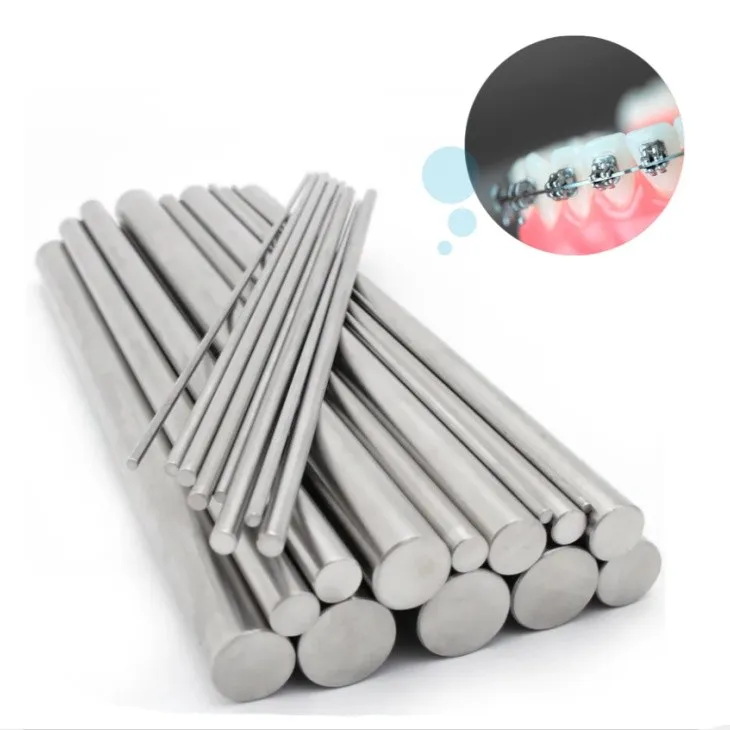

The development of ASTM F136 GR.23 was driven by the increasing demand for high - quality titanium materials in the medical industry. As medical technology advanced, more complex and precise implant designs were being developed. These implants required materials with superior mechanical properties and a high level of purity.
The standardization of ASTM F136 GR.23 ensured that manufacturers could produce titanium bars that met the exacting requirements of medical device manufacturers. It specified the acceptable ranges for elements such as aluminum, vanadium, iron, and oxygen, as well as the minimum values for tensile strength, yield strength, and elongation.
Applications of ASTM F136 GR.23 Titanium Bar
Medical Applications
One of the most significant applications of ASTM F136 GR.23 Titanium Bar is in the medical field. It is used to manufacture a wide range of surgical implants, including orthopedic implants such as hip joints, knee joints, and spinal implants. The biocompatibility of the material ensures that the implants can integrate well with the surrounding bone and tissue, reducing the risk of rejection. You can find more information about Orthopedic Hip Joint Titanium Bar.
It is also used in dental applications. Dental implants, bases, abutments, and bridges made from ASTM F136 GR.23 Titanium Bar offer excellent durability and a natural - looking appearance. Check out ASTM F136/67 TC4 Ti Rods For Dental Bases Abutment &Bridge for more details.
Aerospace and Other Industries
Although its primary use is in the medical field, ASTM F136 GR.23 Titanium Bar also finds applications in the aerospace industry. Its high strength - to - weight ratio and corrosion resistance make it suitable for certain aircraft components. Additionally, it can be used in other high - performance applications where the combination of strength, light weight, and corrosion resistance is required.
Comparison with Other Titanium Standards
ASTM F136 GR.23 is not the only standard for titanium bars. There are other ASTM standards, such as ASTM B348 Round Bar, which is used for general - purpose titanium bars.
The main difference between ASTM F136 GR.23 and ASTM B348 lies in their intended applications. ASTM B348 is more focused on non - medical applications and has less stringent requirements for biocompatibility and purity compared to ASTM F136 GR.23.
The Evolution of ASTM F136 GR.23 over Time
Over the years, the ASTM F136 GR.23 standard has been updated and refined. As new research and technologies emerge, the requirements for the standard are adjusted to reflect the latest knowledge and best practices.
For example, improvements in manufacturing processes may allow for better control of chemical composition and mechanical properties. The standard may be updated to take advantage of these new processes and ensure that the titanium bars produced meet the highest quality standards.
Quality Control and Certification
As a supplier of ASTM F136 GR.23 Titanium Bar, quality control is of utmost importance. We follow strict manufacturing processes and conduct comprehensive testing to ensure that our products meet the requirements of the ASTM F136 GR.23 standard.
Certification is also a crucial aspect. We provide customers with certificates of conformance that detail the chemical composition, mechanical properties, and other relevant information of the titanium bars. This gives our customers confidence in the quality of our products.
Why Choose Our ASTM F136 GR.23 Titanium Bar
Our company has extensive experience in the production and supply of ASTM F136 GR.23 Titanium Bar. We have a dedicated team of experts who are well - versed in the requirements of the standard and can ensure that our products meet or exceed the specified criteria.
We source our raw materials from reliable suppliers and use state - of - the - art manufacturing equipment to produce high - quality titanium bars. Our commitment to quality, combined with our competitive pricing and timely delivery, makes us a preferred choice for many customers in the medical and other industries.
Conclusion
The history of the ASTM F136 GR.23 Titanium Bar standard is a story of innovation and progress. From the discovery of titanium to the development of specific standards for medical applications, it reflects the continuous efforts to improve the quality and performance of materials.
Whether you are a medical device manufacturer looking for high - quality titanium bars for implants or an aerospace company in need of lightweight and strong materials, ASTM F136 GR.23 Titanium Bar offers a reliable solution.
If you are interested in purchasing ASTM F136 GR.23 Titanium Bar, we invite you to contact us for further discussions. We are eager to understand your specific requirements and provide you with the best - suited products.
References
- ASTM International. "ASTM F136 - 19 Standard Specification for Wrought Titanium - 6 Aluminum - 4 Vanadium Extra - Low Interstitial (ELI) Alloy for Surgical Implant Applications (UNS R56401)."
- "Titanium: A Technical Guide" by John C. Williams.
- Various research papers on the properties and applications of titanium alloys in medical and aerospace industries.