What is the particle size of titanium powder? Well, that's a question I get asked a lot as a titanium powder supplier. In this blog, I'm gonna break down everything you need to know about the particle size of titanium powder, why it matters, and how it impacts different applications.
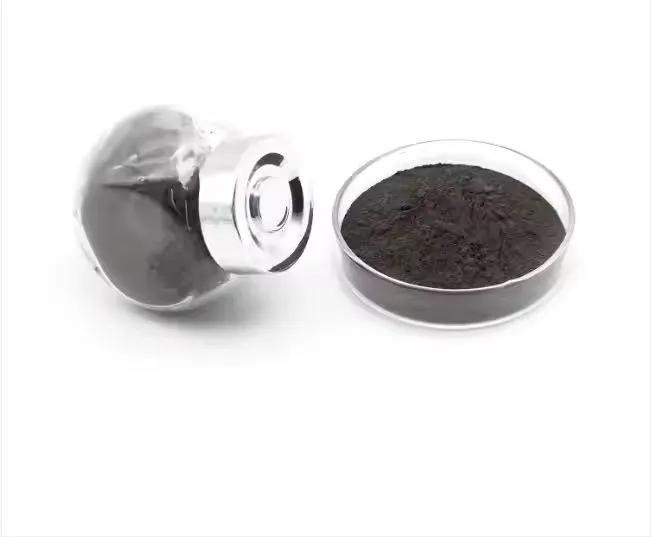

First off, let's talk about what particle size actually means. In the world of titanium powder, particle size refers to the diameter of the individual powder particles. It's usually measured in micrometers (μm). The particle size can vary widely, from just a few micrometers to hundreds of micrometers. And this variation is super important because it affects the properties and performance of the titanium powder in different applications.
One of the key factors that depends on particle size is the flowability of the titanium powder. Smaller particles tend to have better flowability because they can pack together more tightly. This is crucial in applications like powder metallurgy, where the powder needs to flow smoothly into molds or dies. On the other hand, larger particles may have poorer flowability but can offer other advantages, such as better mechanical properties in some cases.
Another important aspect is the surface area of the particles. Smaller particles have a larger surface area per unit mass compared to larger particles. This increased surface area can lead to faster reaction rates in processes like sintering, where the powder is heated to form a solid object. It also affects the powder's reactivity with other materials, which is important in applications like coatings and composites.
Now, let's look at some common particle size ranges for different applications. For 3D Printing Dental Titanium Powder, a very fine particle size is typically required. The ideal range is usually between 15 and 45 micrometers. This fine powder allows for high - resolution printing and excellent surface finish, which is essential for dental applications where precision is key.
In aerospace applications, the particle size requirements can vary depending on the specific component being manufactured. For some parts, a particle size range of 45 - 106 micrometers might be used. This range offers a good balance between flowability and mechanical properties. The powder needs to be able to flow well during the manufacturing process, and at the same time, the resulting component should have the necessary strength and durability to withstand the harsh conditions in aerospace environments.
For Titanium Alloy Powder, the particle size also plays a crucial role. Alloying elements need to be evenly distributed throughout the powder, and the particle size can affect how well this happens. A well - controlled particle size helps ensure consistent alloy properties, which is vital for applications where high performance and reliability are required.
The method of producing titanium powder also has an impact on the particle size. There are several production methods, such as the Kroll process, the Armstrong process, and gas atomization. Gas atomization is a popular method for producing high - quality titanium powder with a narrow particle size distribution. It involves melting the titanium and then atomizing it into fine droplets using a high - pressure gas stream. The resulting powder particles are generally spherical in shape, which is beneficial for flowability.
When it comes to quality control, measuring the particle size accurately is essential. There are several techniques available for particle size analysis, including laser diffraction, sedimentation, and microscopy. Laser diffraction is a widely used method because it's fast, accurate, and can measure a wide range of particle sizes. By regularly analyzing the particle size of our titanium powder, we can ensure that it meets the strict requirements of our customers.
As a titanium powder supplier, I understand that every customer has unique needs when it comes to particle size. That's why we offer a wide range of titanium powders with different particle size distributions. Whether you're in the dental industry, aerospace, or any other field that uses titanium powder, we can work with you to find the perfect product for your application.
If you're interested in learning more about our titanium powder products or have specific requirements regarding particle size, don't hesitate to reach out. We're here to help you make the right choice for your project. Whether it's for a small - scale research project or a large - scale industrial application, we have the expertise and the products to meet your needs.
In conclusion, the particle size of titanium powder is a critical factor that affects its properties, performance, and suitability for different applications. By understanding the relationship between particle size and application requirements, you can make more informed decisions when it comes to choosing the right titanium powder. So, if you're in the market for titanium powder, give us a shout, and let's start a conversation about how we can help you with your procurement needs.
References
- Smith, J. (2018). Titanium Powder Technology: Production, Properties, and Applications. Journal of Materials Science.
- Johnson, A. (2020). Advances in Particle Size Analysis for Metal Powders. Powder Metallurgy Review.