

Hey there! As a supplier of Medical Titanium Wire, I often get asked whether medical titanium wire can be used in minimally invasive surgery. Well, let's dig into this topic and find out.
First off, what makes medical titanium wire so special? Titanium is a super - cool metal. It's lightweight, strong, and has excellent corrosion resistance. These properties make it a top - choice material in the medical field. When it comes to minimally invasive surgery, every little thing matters. The tools need to be precise, durable, and biocompatible. And medical titanium wire checks all these boxes.
One of the key requirements for minimally invasive surgery is the ability of the materials to interact well with the human body. Titanium is highly biocompatible, which means it doesn't cause any adverse reactions when it comes into contact with body tissues. It won't trigger an immune response or cause inflammation. This is crucial because in minimally invasive surgery, the body is already under stress from the procedure, and we don't want any additional complications from the materials used.
Another great thing about medical titanium wire is its strength - to - weight ratio. Minimally invasive surgical instruments need to be able to perform delicate tasks with precision. Titanium wire is strong enough to withstand the forces involved in cutting, suturing, or manipulating tissues, but it's also light enough not to add unnecessary bulk to the instruments. This allows for more dexterity and control during the surgery.
Let's talk about some specific types of medical titanium wire. For example, the GR5 Titanium Wire Rod. GR5 titanium, also known as Ti - 6Al - 4V, is one of the most widely used titanium alloys in the medical industry. It has high strength, good ductility, and excellent corrosion resistance. In minimally invasive surgery, GR5 titanium wire rod can be used to make various surgical tools, such as guidewires or staples. Guidewires are used to navigate through blood vessels or other body channels, and the strength and flexibility of GR5 titanium make it an ideal material for this purpose.
Then there's the Ti - 6AI - 7Nb Medical Titanium Wire. This alloy is a great alternative to Ti - 6Al - 4V, especially for applications where the presence of vanadium might be a concern. Ti - 6AI - 7Nb has similar mechanical properties to Ti - 6Al - 4V but is considered to be more biocompatible in some cases. It can be used in orthopedic minimally invasive surgeries, for example, to fix small bone fractures or to support soft tissues.
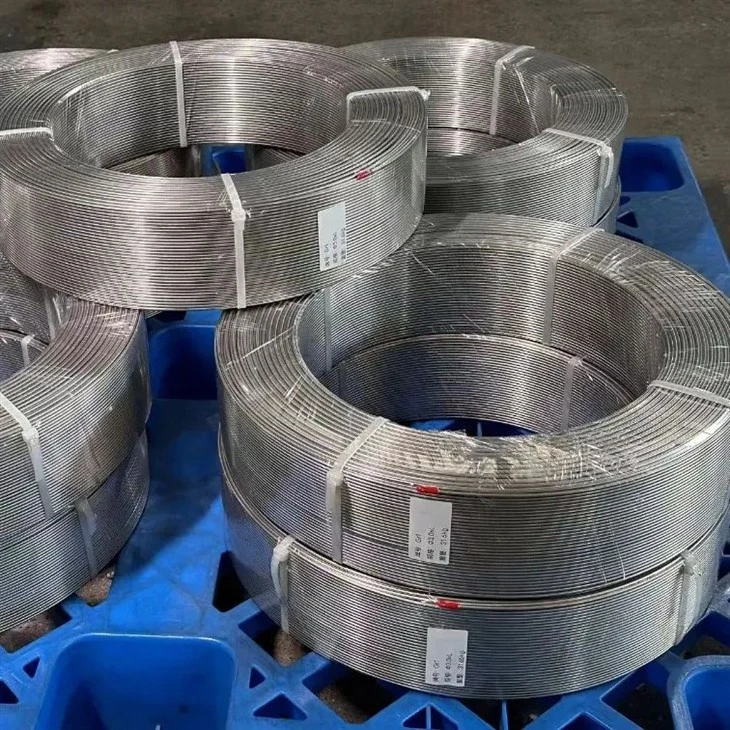
Of course, our general Medical Titanium Wire comes in various sizes and specifications to meet different surgical needs. Whether you need a very thin wire for microsurgery or a thicker wire for more heavy - duty applications, we've got you covered.
Now, let's look at some real - world examples of how medical titanium wire is used in minimally invasive surgery. In laparoscopic surgery, which is a common type of minimally invasive surgery, titanium wire can be used to create surgical meshes. These meshes are used to repair hernias or to support weakened abdominal walls. The biocompatibility of titanium ensures that the mesh won't cause any long - term problems in the body, and its strength helps to hold the tissues in place during the healing process.
In cardiac minimally invasive surgery, medical titanium wire can be used to make pacemaker leads. Pacemakers are small devices that help regulate the heart's rhythm. The leads need to be flexible, durable, and biocompatible. Titanium wire meets all these requirements, allowing for a reliable connection between the pacemaker and the heart tissue.
But like any material, medical titanium wire also has some limitations. One of the main challenges is the cost. Titanium is more expensive than some other metals, which can increase the overall cost of the surgical procedure. However, when you consider the long - term benefits, such as reduced risk of complications and better patient outcomes, the cost can be justified.
Another aspect to consider is the manufacturing process. Producing high - quality medical titanium wire requires specialized equipment and expertise. The wire needs to be manufactured to very strict standards to ensure its safety and effectiveness in surgery. But as a professional supplier, we have the experience and technology to produce medical titanium wire that meets these high standards.
In conclusion, medical titanium wire can definitely be used in minimally invasive surgery. Its unique properties, such as biocompatibility, strength - to - weight ratio, and corrosion resistance, make it an ideal material for a wide range of surgical applications. Whether you're a surgeon looking for the best materials for your minimally invasive procedures or a medical device manufacturer in need of high - quality titanium wire, we're here to help.
If you're interested in purchasing medical titanium wire for your surgical needs, feel free to reach out to us. We can provide you with detailed information about our products, including specifications, pricing, and delivery options. We're always happy to have a chat and discuss how our medical titanium wire can meet your specific requirements.
References

- "Biomaterials Science: An Introduction to Materials in Medicine" by Buddy D. Ratner, Allan S. Hoffman, Frederick J. Schoen, and Jack E. Lemons
- "Titanium and Titanium Alloys: Fundamentals and Applications" by Yuri Estrin, Michael Peters, and Easo P. George


