

As a supplier of Titanium Alloy Powder, I've witnessed firsthand the growing interest in this remarkable material across various industries. In this blog post, I'll delve into how Titanium Alloy Powder compares to other metal powders, highlighting its unique properties, advantages, and potential applications.
Understanding Metal Powders
Before we compare Titanium Alloy Powder to other metal powders, it's essential to understand the basics of metal powders. Metal powders are fine particles of metals or metal alloys used in a wide range of applications, including powder metallurgy, additive manufacturing (3D printing), and surface coating. The choice of metal powder depends on several factors, such as the desired properties of the final product, the manufacturing process, and cost considerations.
Some of the most commonly used metal powders include aluminum, stainless steel, copper, and titanium. Each metal powder has its own set of properties, advantages, and limitations, making it suitable for specific applications.
Properties of Titanium Alloy Powder
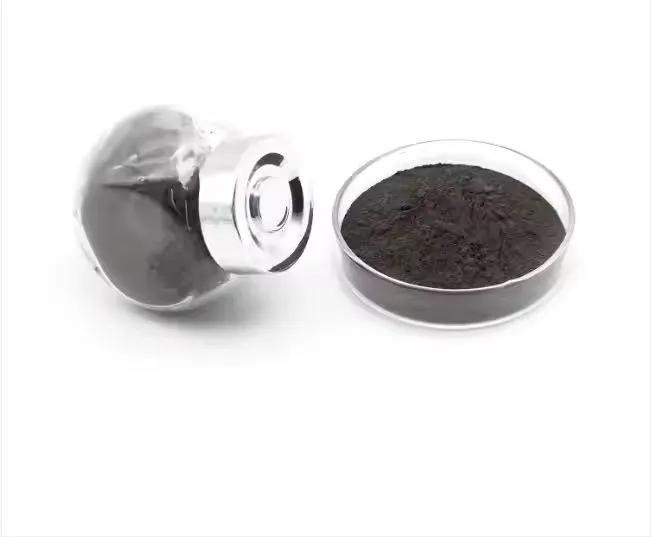
Titanium Alloy Powder is a type of metal powder composed of titanium and other alloying elements, such as aluminum, vanadium, and molybdenum. These alloying elements enhance the properties of titanium, making it stronger, more corrosion-resistant, and more heat-resistant.
One of the most significant advantages of Titanium Alloy Powder is its high strength-to-weight ratio. Titanium alloys are known for their excellent strength, comparable to that of steel, but with a much lower density. This makes titanium alloys ideal for applications where weight reduction is critical, such as aerospace, automotive, and sports equipment.
Another key property of Titanium Alloy Powder is its exceptional corrosion resistance. Titanium alloys are highly resistant to corrosion in a wide range of environments, including seawater, acids, and alkalis. This makes them suitable for applications in harsh environments, such as marine and chemical industries.
In addition to its strength and corrosion resistance, Titanium Alloy Powder also has excellent biocompatibility. Titanium alloys are widely used in medical applications, such as dental implants and orthopedic devices, due to their ability to integrate with human tissue without causing adverse reactions.
Comparison with Other Metal Powders
Now, let's compare Titanium Alloy Powder to other commonly used metal powders in terms of their properties, advantages, and applications.
Aluminum Powder
Aluminum powder is a lightweight metal powder with a low density and good thermal conductivity. It is commonly used in applications where weight reduction and heat dissipation are important, such as aerospace, automotive, and electronics.
Compared to Titanium Alloy Powder, aluminum powder has a lower strength and corrosion resistance. Aluminum alloys are also more prone to oxidation and corrosion in certain environments, such as saltwater. However, aluminum powder is generally more affordable than Titanium Alloy Powder, making it a cost-effective option for some applications.
Stainless Steel Powder
Stainless steel powder is a popular metal powder known for its high strength, corrosion resistance, and durability. It is widely used in applications where strength and corrosion resistance are critical, such as construction, automotive, and food processing.
While stainless steel powder has excellent corrosion resistance, it is generally heavier than Titanium Alloy Powder. This makes it less suitable for applications where weight reduction is a priority. Additionally, stainless steel powder is more prone to magnetic interference, which can be a concern in some electronic applications.
Copper Powder
Copper powder is a highly conductive metal powder with excellent electrical and thermal conductivity. It is commonly used in applications where electrical and thermal conductivity are important, such as electronics, electrical wiring, and heat exchangers.
Compared to Titanium Alloy Powder, copper powder has a lower strength and corrosion resistance. Copper alloys are also more prone to oxidation and corrosion in certain environments, such as acidic or alkaline solutions. However, copper powder is generally more affordable than Titanium Alloy Powder, making it a cost-effective option for some applications.
Applications of Titanium Alloy Powder
Due to its unique properties, Titanium Alloy Powder is used in a wide range of applications across various industries. Some of the most common applications of Titanium Alloy Powder include:

Aerospace Industry
The aerospace industry is one of the largest consumers of Titanium Alloy Powder. Titanium alloys are used in aircraft components, such as engine parts, landing gear, and structural components, due to their high strength-to-weight ratio, corrosion resistance, and heat resistance.
Automotive Industry
In the automotive industry, Titanium Alloy Powder is used in high-performance engines, exhaust systems, and suspension components. Titanium alloys can help reduce the weight of vehicles, improve fuel efficiency, and enhance performance.
Medical Industry
Titanium alloys are widely used in the medical industry due to their excellent biocompatibility. Titanium Alloy Powder is used in dental implants, orthopedic devices, and surgical instruments, where it can integrate with human tissue without causing adverse reactions.
Sports Equipment Industry
The sports equipment industry also benefits from the unique properties of Titanium Alloy Powder. Titanium alloys are used in golf clubs, tennis rackets, bicycles, and other sports equipment, where they can provide a combination of strength, light weight, and durability.
Conclusion
In conclusion, Titanium Alloy Powder offers several advantages over other metal powders, including high strength-to-weight ratio, excellent corrosion resistance, and biocompatibility. These properties make it suitable for a wide range of applications across various industries, from aerospace and automotive to medical and sports equipment.
If you're interested in learning more about Titanium Alloy Powder or exploring its potential applications in your industry, I encourage you to visit our website Titanium Alloy Powder. We also offer 3D Printing Dental Titanium Powder for specific applications in the dental industry.
Whether you're a manufacturer looking for a high-performance metal powder or a researcher exploring new applications, we're here to help. Contact us today to discuss your requirements and learn how Titanium Alloy Powder can benefit your business.
References
- ASM Handbook, Volume 7: Powder Metal Technologies and Applications
- Metals Handbook: Properties and Selection: Nonferrous Alloys and Pure Metals
- Titanium: A Technical Guide, Second Edition


