

As a supplier of Titanium Alloy Powder, I've witnessed firsthand the importance of optimizing the production process. Titanium alloy powder is a crucial material in various industries, including aerospace, automotive, and medical, due to its high strength, low density, and excellent corrosion resistance. In this blog, I'll share some strategies on how to optimize the production process of Titanium Alloy Powder.
Raw Material Selection
The quality of raw materials is the foundation of high - quality Titanium Alloy Powder production. When selecting titanium sponge and alloying elements, we must ensure their purity and chemical composition meet strict standards. Impurities in raw materials can significantly affect the properties of the final powder. For example, even a small amount of oxygen or nitrogen can reduce the ductility and toughness of the titanium alloy.
We source our titanium sponge from reliable suppliers who adhere to international quality standards. We also conduct in - house testing on all incoming raw materials to verify their chemical composition and purity. By carefully controlling the raw materials, we can reduce the likelihood of defects in the final powder and improve its overall quality.
Melting Process Optimization
The melting process is a critical step in Titanium Alloy Powder production. There are several methods for melting titanium alloys, such as vacuum arc melting (VAM), electron beam melting (EBM), and induction melting. Each method has its own advantages and disadvantages.

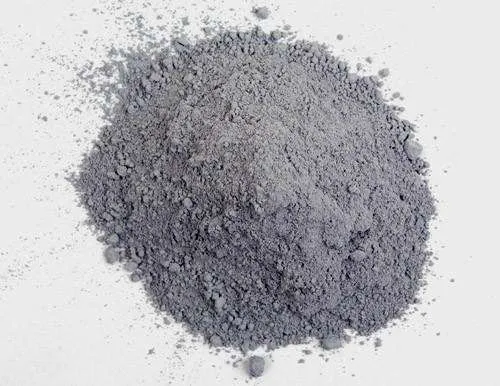
Vacuum arc melting is widely used because it can produce high - quality ingots with uniform chemical composition. However, it may have some limitations in terms of energy efficiency and production capacity. Electron beam melting, on the other hand, is suitable for melting high - purity titanium alloys and can be used to produce powders with fine particle sizes. Induction melting is a more cost - effective method and is suitable for large - scale production.
To optimize the melting process, we need to control several parameters, such as melting temperature, melting time, and the vacuum level in the melting chamber. For example, a higher melting temperature can ensure better homogenization of the alloy, but it may also increase the risk of evaporation of some alloying elements. Therefore, we need to find the optimal melting temperature for each specific alloy composition.
Atomization Process Improvement
The atomization process is used to convert the molten titanium alloy into powder. There are two main types of atomization methods: gas atomization and plasma atomization.
Gas atomization is the most commonly used method. In this process, a high - pressure gas (usually argon) is used to break up the molten metal stream into small droplets, which then solidify into powder particles. The particle size and shape of the powder can be controlled by adjusting the gas pressure, the flow rate of the molten metal, and the nozzle design.
Plasma atomization is a more advanced method that can produce powders with a narrower particle size distribution and better spherical shape. However, it is a more expensive process.
To improve the atomization process, we continuously research and develop new nozzle designs and gas flow control systems. We also optimize the process parameters based on the specific requirements of different applications. For example, for 3D Printing Dental Titanium Powder, we need to produce powder with a very fine particle size and high sphericality to ensure good flowability and printing quality.
Post - processing
After atomization, the titanium alloy powder needs to undergo post - processing steps, such as sieving, classification, and surface treatment.
Sieving is used to remove large particles and agglomerates from the powder. Classification is then carried out to separate the powder into different particle size fractions. This is important because different applications require powders with specific particle size ranges.
Surface treatment can improve the flowability and oxidation resistance of the powder. For example, we can coat the powder particles with a thin layer of oxide or other protective materials to prevent oxidation during storage and use.
Quality Control
Quality control is an essential part of the production process. We use a variety of testing methods to ensure the quality of our Titanium Alloy Powder. These include chemical analysis to determine the composition of the powder, particle size analysis to measure the size distribution of the particles, and morphological analysis to examine the shape and surface characteristics of the particles.
We also conduct mechanical property testing on samples made from the powder to verify its performance. For example, we can test the tensile strength, hardness, and ductility of titanium alloy parts produced from our powder. By implementing strict quality control measures at every stage of the production process, we can ensure that our customers receive high - quality products that meet their specific requirements.
Process Automation
Automation can significantly improve the efficiency and consistency of the production process. We are constantly investing in automation technologies, such as robotic handling systems, automated melting furnaces, and computer - controlled atomization equipment.
Automation can reduce human error, improve process control, and increase production capacity. For example, a robotic handling system can accurately transfer the raw materials and semi - finished products between different production steps, reducing the risk of contamination and damage. Automated melting furnaces can precisely control the melting temperature and time, ensuring the consistency of the alloy composition.
Energy Efficiency
Energy consumption is a significant cost factor in Titanium Alloy Powder production. To reduce energy consumption, we adopt several measures. For example, we use energy - efficient melting furnaces and atomization equipment. We also optimize the production process to reduce the energy required for each step.
In addition, we are exploring the use of renewable energy sources, such as solar and wind power, to power our production facilities. By reducing our energy consumption and carbon footprint, we not only lower our production costs but also contribute to environmental protection.
Continuous Research and Development
The demand for Titanium Alloy Powder is constantly evolving, and new applications are emerging all the time. Therefore, continuous research and development are crucial for optimizing the production process. We collaborate with research institutions and universities to stay at the forefront of technology.
We are researching new alloy compositions that can offer better performance in specific applications. We are also exploring new production methods that can improve the quality and efficiency of powder production. For example, we are studying the use of advanced materials and manufacturing techniques to develop more efficient atomization nozzles.
Conclusion
Optimizing the production process of Titanium Alloy Powder is a complex but rewarding task. By focusing on raw material selection, melting process optimization, atomization process improvement, post - processing, quality control, process automation, energy efficiency, and continuous research and development, we can produce high - quality Titanium Alloy Powder that meets the diverse needs of our customers.
If you are interested in our Titanium Alloy Powder and want to discuss your specific requirements, please feel free to reach out to us. We are more than happy to have in - depth discussions and cooperate with you to meet your production needs.
References
- Smith, J. (2018). Titanium Alloys: Properties, Processing, and Applications. Metalurgy Press.
- Johnson, A. (2020). Advances in Titanium Powder Production Technology. Powder Metallurgy Journal.
- Brown, C. (2019). Quality Control in Titanium Alloy Manufacturing. Manufacturing Science Review.


