

What is the elastic limit of titanium plates?
As a seasoned supplier of titanium plates, I've had numerous inquiries about the elastic limit of these remarkable materials. Titanium plates are highly sought - after for a wide range of applications, from aerospace and automotive industries to medical fields, due to their exceptional properties. Understanding the elastic limit is crucial for both designers and end - users to ensure the safe and efficient use of titanium plates.
The elastic limit is defined as the maximum stress that a material can withstand without undergoing permanent deformation. When a stress is applied to a titanium plate within its elastic limit, the plate will return to its original shape once the stress is removed. This property is of utmost importance in applications where the material needs to endure repeated loading and unloading cycles without losing its structural integrity.
Titanium plates come in different grades, each with its own unique set of mechanical properties, including the elastic limit. One of the most commonly used grades is Ti - 6Al - 4V, also known as Grade 5 titanium. This alloy is a workhorse in the industry, known for its high strength - to - weight ratio, excellent corrosion resistance, and good weldability. The elastic limit of Ti - 6Al - 4V titanium plates typically ranges from about 800 to 900 megapascals (MPa). This relatively high elastic limit makes it suitable for applications such as aircraft components, where the material is subjected to significant stress during flight.
Another important grade is Grade 2 titanium. ASTM B265 Gr2 Titanium Plate is a commercially pure titanium with good formability and corrosion resistance. The elastic limit of Grade 2 titanium plates is generally lower than that of Ti - 6Al - 4V, usually around 275 - 345 MPa. However, its lower cost and ease of fabrication make it a popular choice for applications where high strength is not the primary requirement, such as chemical processing equipment and marine applications.
In the medical field, titanium plates play a vital role in orthopedic surgeries. GR23 Medical Titanium Plate and Ti - 6Al - 4V ELI Medical Titanium Trauma Bone Plates are specifically designed for use in the human body. The elastic limit of these medical - grade titanium plates is carefully engineered to match the mechanical properties of human bones. This ensures that the plates can support the bone during the healing process without causing excessive stress on the surrounding tissues. For example, the elastic limit of GR23 titanium, which is an extra - low - interstitial version of Ti - 6Al - 4V, is similar to that of the standard Ti - 6Al - 4V but with enhanced biocompatibility.
Several factors can affect the elastic limit of titanium plates. The manufacturing process is one of the key factors. Plates that are hot - rolled or cold - worked may have different elastic limits compared to those produced by other methods. Heat treatment can also significantly alter the mechanical properties of titanium plates. For instance, annealing can relieve internal stresses and improve the ductility of the material, which may in turn affect the elastic limit.
The composition of the titanium alloy also plays a crucial role. Minor variations in the alloying elements can lead to changes in the crystal structure of the titanium, which directly impacts its mechanical properties. For example, adding small amounts of vanadium or aluminum can increase the strength and elastic limit of the alloy.
In addition, the thickness and surface finish of the titanium plate can influence its elastic limit. Thicker plates may have a different stress - distribution pattern compared to thinner ones, which can affect the point at which permanent deformation occurs. A smooth surface finish can reduce stress concentrations, thereby increasing the effective elastic limit of the plate.
When using titanium plates in engineering applications, it is essential to consider the safety factor. A safety factor is a multiplier applied to the expected maximum stress to ensure that the actual stress on the material remains well within its elastic limit. This provides an additional margin of safety to account for uncertainties in loading conditions, material properties, and manufacturing processes.
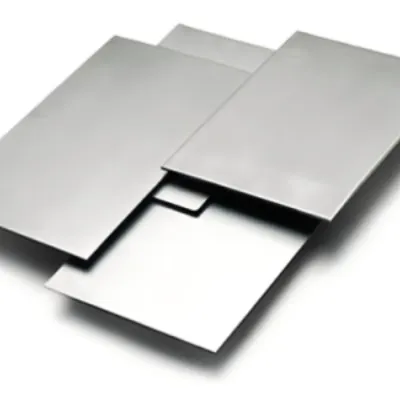

In conclusion, the elastic limit of titanium plates is a critical property that depends on various factors such as the grade of the titanium, the manufacturing process, and the application requirements. As a supplier of titanium plates, I am committed to providing high - quality products with well - defined mechanical properties. Whether you are in the aerospace, automotive, medical, or other industries, understanding the elastic limit of titanium plates is essential for the successful design and implementation of your projects.
If you are interested in purchasing titanium plates for your specific application, I encourage you to reach out to me for a detailed discussion. We can work together to select the most suitable grade and specifications based on your needs. Let's start a conversation to explore how our titanium plates can meet your requirements and contribute to the success of your projects.
References
- ASM Handbook Volume 2: Properties and Selection: Nonferrous Alloys and Special - Purpose Materials. ASM International.
- Titanium: A Technical Guide. John R. Davis (Editor). ASM International.
- "Mechanical Properties of Titanium Alloys" by various authors in academic journals related to materials science.


