

Hey there! As a supplier of GR.2 Titanium Wire, I often get asked about the fatigue strength of this amazing material. So, I thought I'd take the time to break it down for you and give you a better understanding of what makes GR.2 Titanium Wire so special.
First off, let's talk about what fatigue strength actually means. Fatigue strength is the maximum stress that a material can withstand for a given number of cycles without failing. In simpler terms, it's how much stress a material can handle over and over again before it breaks. This is a crucial property, especially in applications where the material will be subjected to repeated loading, like in aerospace, automotive, and medical industries.
GR.2 Titanium Wire is a commercially pure titanium grade. It's known for its excellent corrosion resistance, good formability, and high strength - to - weight ratio. These properties make it a popular choice in a wide range of applications. But when it comes to fatigue strength, there are several factors that come into play.

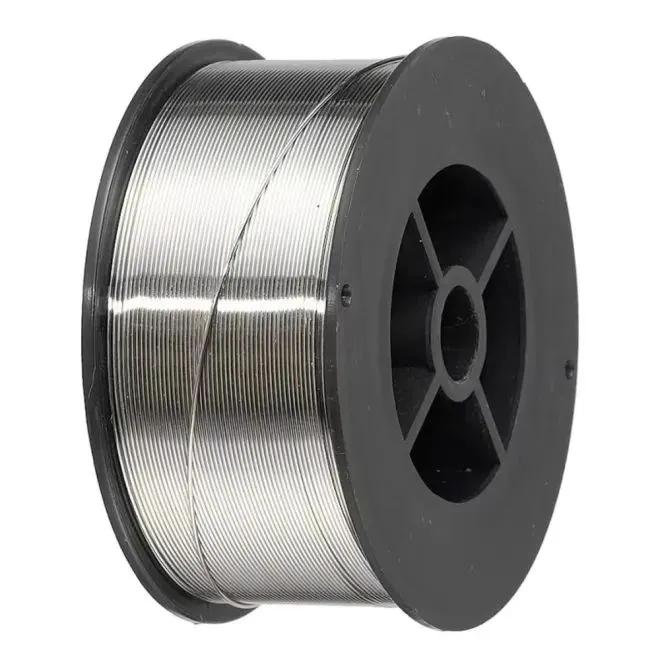
One of the key factors affecting the fatigue strength of GR.2 Titanium Wire is its microstructure. The way the titanium atoms are arranged in the wire can have a big impact on how it responds to cyclic loading. A fine - grained microstructure generally leads to better fatigue resistance. This is because the smaller grains act as barriers to the propagation of cracks, which are the main cause of fatigue failure. During the manufacturing process of our GR.2 Titanium Wire, we carefully control the heat treatment and processing parameters to achieve an optimal microstructure that enhances its fatigue strength.
Surface finish also plays a significant role in fatigue strength. A smooth surface finish on the GR.2 Titanium Wire reduces the stress concentration points. Stress concentrations can act as initiation sites for cracks, so minimizing them is essential. Our production process includes advanced surface treatment techniques to ensure that the wire has a smooth and uniform surface, which in turn improves its fatigue performance.
The diameter of the GR.2 Titanium Wire can also influence its fatigue strength. Generally, thinner wires tend to have higher fatigue strength per unit cross - sectional area. This is because the stress distribution is more uniform in thinner wires, and there are fewer internal defects that could lead to crack initiation. We offer GR.2 Titanium Wire in a variety of diameters to meet the specific needs of our customers, whether they're looking for high - fatigue - strength applications or other requirements.
Now, let's take a look at some real - world applications where the fatigue strength of GR.2 Titanium Wire is crucial. In the aerospace industry, GR.2 Titanium Wire is used in components such as aircraft fasteners and hydraulic lines. These parts are subjected to constant vibrations and cyclic loading during flight. The high fatigue strength of our GR.2 Titanium Wire ensures that these components can withstand the harsh conditions and have a long service life.
In the medical field, Medical Titanium Wire is often used in orthopedic implants and dental applications. For example, in orthopedic implants, the wire may be used in fixation devices that need to support the weight of the patient and withstand the repeated stresses of movement. The excellent fatigue strength of GR.2 Titanium Wire makes it a reliable choice for these critical medical applications, as it can endure the long - term cyclic loading without failing.
When comparing GR.2 Titanium Wire with other materials, it really stands out in terms of fatigue performance. For instance, compared to some common steel wires, GR.2 Titanium Wire has a better strength - to - weight ratio and superior corrosion resistance. This means that in applications where weight and corrosion are concerns, GR.2 Titanium Wire is a clear winner. And its fatigue strength allows it to perform well under cyclic loading, even in harsh environments.
Another great thing about GR.2 Titanium Wire is its compatibility with other materials. It can be easily joined with other titanium alloys or other metals using various welding techniques. Our Titanium Alloy Grade 1 Filler Wire (ERTi - 1) is often used in combination with GR.2 Titanium Wire for welding applications. This filler wire helps to maintain the integrity of the joint and ensures that the fatigue strength of the welded structure is not compromised.
If you're in the market for high - quality GR.2 Titanium Wire, you've come to the right place. Our GR2 Titanium Wire is manufactured to the highest standards, with a focus on optimizing its fatigue strength and other key properties. We have a team of experts who are always ready to answer your questions and help you find the right solution for your specific application.
Whether you're an engineer working on a new aerospace project, a medical device manufacturer looking for reliable materials, or involved in any other industry that requires high - performance titanium wire, we can provide you with the GR.2 Titanium Wire you need. We understand the importance of fatigue strength in your applications, and we're committed to delivering a product that meets and exceeds your expectations.
So, if you're interested in learning more about our GR.2 Titanium Wire or would like to discuss a potential purchase, don't hesitate to reach out. We're here to assist you in every step of the process, from product selection to after - sales support.
References
- ASM Handbook Volume 2: Properties and Selection: Nonferrous Alloys and Special - Purpose Materials
- Titanium: A Technical Guide, Second Edition by John C. Williams


