

In the realm of advanced materials, GR.12 titanium wire rod stands out as a remarkable alloy with a unique set of optical properties that have far - reaching implications across various industries. As a supplier of GR.12 titanium wire rod, I am excited to delve into the details of its optical characteristics and explore how they contribute to its widespread applications.
Understanding GR.12 Titanium Alloy
GR.12 titanium alloy is a near - alpha titanium alloy composed mainly of titanium, with small amounts of molybdenum (Mo) and nickel (Ni). This alloy is known for its excellent corrosion resistance, good weldability, and high strength - to - weight ratio. These properties make it suitable for a variety of applications, including chemical processing, marine engineering, and medical devices.
Optical Reflectivity
One of the key optical properties of GR.12 titanium wire rod is its reflectivity. Titanium in general has a relatively high reflectivity in the visible and infrared regions of the electromagnetic spectrum. The surface finish of the GR.12 titanium wire rod plays a crucial role in determining its reflectivity. A smooth, polished surface will have a higher reflectivity compared to a rough or oxidized surface.
In applications where reflectivity is important, such as in optical mirrors or reflective coatings, GR.12 titanium wire rod can be processed to achieve the desired surface finish. The high reflectivity of GR.12 titanium also makes it useful in aerospace applications, where it can be used to reduce heat absorption by reflecting sunlight. For more information on Titanium Wire for Aerospace, you can visit our website.
Absorption and Transmission
While GR.12 titanium wire rod has a certain degree of reflectivity, it also exhibits absorption and transmission characteristics in different parts of the electromagnetic spectrum. In the ultraviolet (UV) region, titanium has a relatively high absorption coefficient. This property can be exploited in applications where UV protection is required, such as in sunscreen additives or UV - blocking coatings.
In the visible and infrared regions, the absorption and transmission of GR.12 titanium wire rod depend on its thickness and surface treatment. Thinner wires may allow some light to pass through, while thicker rods may absorb more light. This behavior can be controlled through precise manufacturing processes to meet the specific requirements of different applications.
Color and Appearance
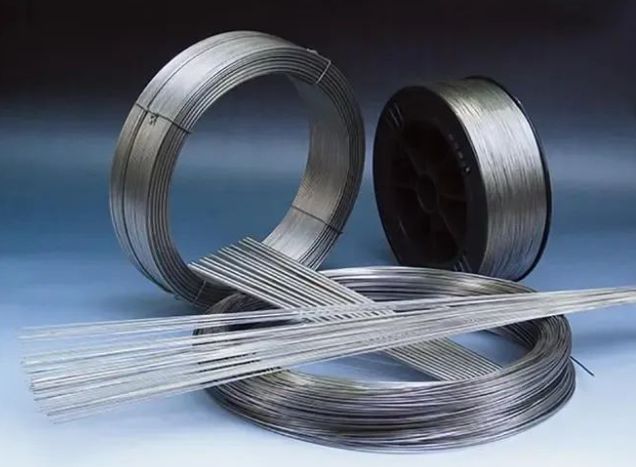
The color of GR.12 titanium wire rod can vary depending on its surface condition and the presence of any oxide layers. In its natural state, titanium has a silver - gray color. However, when exposed to oxygen at high temperatures, a thin oxide layer forms on the surface, which can change the color of the titanium. This oxide layer can range in color from pale yellow to deep blue, depending on its thickness.
The ability to control the color of GR.12 titanium wire rod through oxidation makes it an attractive material for decorative applications. For example, in the jewelry industry, GR.12 titanium wire rod can be anodized to create a variety of colors, offering a unique and durable alternative to traditional precious metals.
Interaction with Light in Different Environments
The optical properties of GR.12 titanium wire rod can also be affected by the environment in which it is used. In a corrosive environment, such as in seawater or chemical solutions, the surface of the titanium may be altered, which can in turn affect its optical properties. However, the excellent corrosion resistance of GR.12 titanium alloy helps to maintain its optical characteristics over time.
In high - temperature environments, the thermal expansion of GR.12 titanium wire rod can cause changes in its surface morphology, which may impact its reflectivity and absorption. Understanding these environmental effects is crucial for ensuring the long - term performance of GR.12 titanium wire rod in various applications.
Comparison with Other Titanium Alloys
When comparing GR.12 titanium wire rod with other titanium alloys, such as GR5 Titanium Wire Rod, there are some differences in their optical properties. GR5 titanium alloy, also known as Ti - 6Al - 4V, is a widely used alpha - beta titanium alloy. It has a higher strength than GR.12 but may have different reflectivity and absorption characteristics due to its different chemical composition.
GR.12 titanium wire rod, on the other hand, offers better corrosion resistance and weldability, which can be advantageous in applications where these properties are more important than high strength. The choice between GR.12 and GR5 titanium wire rod depends on the specific requirements of the application, including the desired optical properties.

Applications in the Medical Field
In the medical field, the optical properties of GR.12 titanium wire rod also play an important role. Titanium is biocompatible, which means it is well - tolerated by the human body. The smooth surface of GR.12 titanium wire rod can be beneficial in medical devices, as it reduces the risk of tissue irritation.
In addition, the reflectivity and color of GR.12 titanium wire rod can be used for aesthetic purposes in medical implants. For example, in dental implants, the natural silver - gray color of titanium can provide a more natural appearance compared to other materials. To learn more about Medical Titanium Wire, please visit our website.
Conclusion
The optical properties of GR.12 titanium wire rod are a fascinating aspect of this versatile material. Its reflectivity, absorption, transmission, color, and interaction with light in different environments make it suitable for a wide range of applications, from aerospace and chemical processing to jewelry and medical devices.
As a supplier of GR.12 titanium wire rod, we are committed to providing high - quality products that meet the specific requirements of our customers. Whether you need GR.12 titanium wire rod for its optical properties or other characteristics, we have the expertise and resources to deliver the right solution.
If you are interested in purchasing GR.12 titanium wire rod or have any questions about its optical properties or applications, please feel free to contact us for a detailed discussion. We look forward to working with you to meet your material needs.
References
- "Titanium and Titanium Alloys: Fundamentals and Applications" by Yuri Estrin, M. A. Meyers, and D. Branagan.
- "Handbook of Titanium Science and Technology" edited by R. I. Jaffee and H. M. Burte.
- Various research papers on the optical properties of titanium alloys published in scientific journals.


