

The history and current status of titanium metal application in orthopedics
Since 1972, my country has begun to use domestic titanium and titanium alloy artificial bones and joints for clinical treatment. Beijing General Research Institute of Nonferrous Metals is one of the earliest units in China to study titanium artificial joints, and in 1973 it produced industrial pure titanium artificial femurs and hip joints for clinical use. Up to now, although the amount of titanium used in my country's pharmaceutical industry is relatively low, the growth rate is rapid, exceeding 30%, showing huge market potential. Titanium metal performs well in the auxiliary treatment of orthopedic diseases. For example, in the treatment of patellar fractures, patellar concentrators made of titanium-nickel alloy plates are simple to operate, save time and effort, and are easy to promote and apply. In addition, titanium products such as corrugated curved foot suture nails and compression plates are also widely used in fracture treatment, achieving good therapeutic effects.
Titanium Alloy Grades and Applications
Ti-6Al-4V and Ti-6Al-4VELI alloys are relatively mature titanium alloys and have been widely used in implant materials. However, due to the presence of toxic element vanadium, long-term use may be potentially harmful to the human body, so their application has gradually declined.
In order to deal with this problem, several vanadium-free medical titanium alloys have been developed internationally, such as Switzerland's Ti-6Al-7Nb alloy, my country's vanadium-free medical titanium alloy, Germany's Ti-5Al-2.5Fe alloy, India's Ti-5Al-1.5B alloy and Ti-15Mo-5Zr-3Al alloy. These new alloys not only ensure biosafety, but also improve mechanical properties to meet the needs of orthopedic surgery.


3D printing and innovative applications of titanium
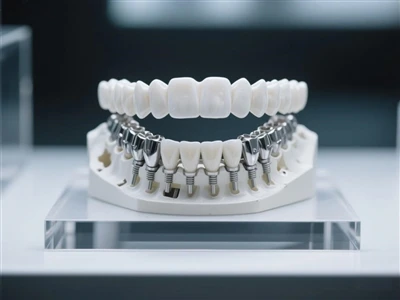
With the rapid development of 3D printing technology, medical additive manufacturing of pure titanium has shown great potential in skull defects, edentulous teeth and hip replacement. Studies have found that the stiffness of 3D printed pure titanium mesh is better than other membranes, which is conducive to the molding of bone graft materials. In addition, customized titanium mesh has the advantages of short operation time and low risk of postoperative infection compared with commercial titanium mesh. Although titanium metal or titanium alloy still has certain mechanical and biological property limitations in clinical applications as bone substitute materials, these problems are expected to be solved with the development of new material technologies such as nanotechnology. For example, the biocompatibility and mechanical properties of titanium alloys can be improved by nanomaterial coating.
In summary, the application prospects of titanium alloys in orthopedic medicine are broad. With the continuous advancement and innovation of science and technology, titanium alloys will play a more important role in orthopedic surgery, bringing better treatment effects and quality of life to patients. At the same time, the titanium industry should also seize this opportunity to promote its own development and make greater contributions to society.


