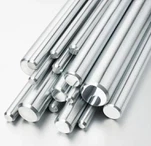
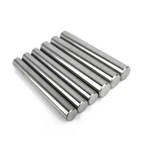
What Are Dental Matrix Titanium Rods?
Dental matrix titanium rods are precision-engineered medical-grade titanium components used in prosthodontics, implantology, and restorative dentistry. These rods serve as:
Support structures for temporary/permanent dental prosthetics
Custom abutments in implant-supported restorations
Framework cores for hybrid dentures and bridgework
Why Titanium? Key Advantages Over Alternatives
✅ Biocompatibility Champion
Grade 4 (CP Ti) & Grade 5 ELI (Ti-6Al-4V) meet ISO 5832-2/3 standards
Zero allergic reactions (vs. nickel-containing alloys)
✅ Biomechanical Superiority
Elastic modulus (110 GPa) closely matches jawbone, preventing stress shielding
Fatigue-resistant for long-term occlusal loading
✅ Corrosion Proof
TiO₂ oxide layer prevents degradation in:
✦ Saliva (pH variations)
✦ Fluoride-rich environments
✅ Digital Workflow Integration
Compatible with CAD/CAM milling & 3D printing (SLM/DMLS) for precision frameworks
Technical Specifications
| Parameter | Grade 4 (CP Ti) | Grade 5 ELI (Ti-6Al-4V) |
|---|---|---|
| Tensile Strength | 483-550 MPa | 860-930 MPa |
| Yield Strength | 345-483 MPa | 795-828 MPa |
| Osteointegration | Excellent | Excellent (anodized) |
| Primary Use | Non-load-bearing frameworks | High-stress implant bars |
Clinical Applications
1. Implant Prosthetics
Custom abutments: Titanium rods milled to exact emergence profiles
Full-arch hybrid dentures: Ti rods as substructures for PMMA/porcelain superstructures
2. Periodontal & Orthodontic Use
Splinting bars for mobile teeth stabilization
Temporary anchorage devices (TADs)
3. Digital Dentistry
3D-printed lattice structures for bone-augmented cases
Guided surgery templates
Innovation Spotlight
🔬 Nano-Surface Modifications
Acid-etched & SLA surfaces increase bone contact area by 40% vs. machined Ti
⚡ Emerging Trends
Peek-Ti hybrid rods combining PEEK's radiolucency with Ti's strength
Antimicrobial coatings (e.g., silver nanoparticles) for peri-implantitis prevention
Selection Guidelines for Dentists
Load Requirements
Grade 4: Single-tooth restorations
Grade 5 ELI: Full-arch reconstructions
Fabrication Method
Milled rods: Highest precision for screw-retained cases
Printed rods: Cost-effective for complex geometries
Surface Optimization
Anodized gold for aesthetic gingival zones
Rough surfaces (Ra=2-4μm) for enhanced secondary stability
Industry Fact: Over 75% of implant bars in full-mouth rehabilitations now use Grade 5 ELI titanium for its fatigue resistance (2023 J Prosthet Dent data).