

In the vast landscape of metallic materials, GR.1 Titanium Wire Rod stands out as a remarkable product, especially when it comes to its creep resistance. As a supplier of GR.1 Titanium Wire Rod, I am often asked about the intricacies of this property and how it impacts the performance of our product. In this blog post, I will delve into the concept of creep resistance, explain what it means for GR.1 Titanium Wire Rod, and discuss its implications in various applications.
Understanding Creep Resistance
Creep is a phenomenon that occurs when a material is subjected to a constant load over an extended period at elevated temperatures. Unlike instantaneous deformation under load, creep is a time - dependent deformation. It is a slow, continuous process that can lead to significant changes in the shape and dimensions of a material over time. Creep resistance, therefore, refers to a material's ability to resist this type of deformation.
The creep process typically consists of three stages: primary creep, secondary creep, and tertiary creep. In the primary creep stage, the deformation rate decreases over time as the material's internal structure adjusts to the applied load. The secondary creep stage is characterized by a relatively constant deformation rate, which is often the most important stage for engineering applications. Finally, in the tertiary creep stage, the deformation rate increases rapidly, leading to eventual failure of the material.
Creep Resistance of GR.1 Titanium Wire Rod
GR.1 Titanium is an unalloyed titanium grade, known for its excellent corrosion resistance, high ductility, and good formability. When it comes to creep resistance, GR.1 Titanium Wire Rod shows a commendable performance, especially considering its relatively pure composition.
The crystal structure of titanium plays a crucial role in its creep behavior. Titanium has a hexagonal close - packed (HCP) crystal structure at room temperature, which transforms to a body - centered cubic (BCC) structure at higher temperatures. This phase transformation can affect the creep resistance of the material. At elevated temperatures, the movement of dislocations within the crystal lattice is one of the main mechanisms responsible for creep deformation. In GR.1 Titanium, the relatively pure nature of the material means that there are fewer alloying elements to impede the movement of dislocations. However, the inherent strength and stability of the titanium lattice still provide a certain level of resistance to creep.
The grain size of the GR.1 Titanium Wire Rod also has a significant impact on its creep resistance. Smaller grain sizes generally lead to higher creep resistance at lower temperatures because the grain boundaries act as barriers to dislocation movement. However, at higher temperatures, larger grain sizes may be more beneficial as they reduce the amount of grain - boundary area, which can be a site for creep - related damage.
Factors Affecting Creep Resistance of GR.1 Titanium Wire Rod
Temperature
Temperature is one of the most critical factors affecting the creep resistance of GR.1 Titanium Wire Rod. As the temperature increases, the kinetic energy of the atoms in the material also increases, making it easier for dislocations to move and for diffusion processes to occur. This leads to an increase in the creep rate. For GR.1 Titanium, the creep resistance starts to decline significantly at temperatures above approximately 300°C.
Stress
The applied stress also has a direct impact on the creep behavior of GR.1 Titanium Wire Rod. Higher stresses result in higher creep rates. The relationship between stress and creep rate is often described by power - law equations, which show that the creep rate increases exponentially with increasing stress. Therefore, in applications where the GR.1 Titanium Wire Rod is subjected to high stresses, the creep resistance becomes a crucial consideration.
Time
Since creep is a time - dependent process, the duration of the applied load is also an important factor. Even at relatively low stresses and temperatures, a long - term load can cause significant creep deformation in GR.1 Titanium Wire Rod. This is particularly important in applications where the material is expected to maintain its shape and dimensions over a long period, such as in aerospace and chemical processing industries.
Applications and Creep Resistance
The creep resistance of GR.1 Titanium Wire Rod makes it suitable for a wide range of applications.
Aerospace Industry
In the aerospace industry, components often operate under high - temperature and high - stress conditions for extended periods. GR.1 Titanium Wire Rod can be used in various aerospace applications, such as in the manufacture of aircraft hydraulic systems and structural components. Its good creep resistance ensures that these components maintain their integrity and performance over the long - term, contributing to the safety and reliability of the aircraft.
Chemical Processing Industry
The chemical processing industry requires materials that can withstand corrosive environments and high - temperature conditions. GR.1 Titanium Wire Rod's excellent corrosion resistance, combined with its reasonable creep resistance, makes it an ideal choice for use in heat exchangers, piping systems, and other equipment. In these applications, the ability of the wire rod to resist creep deformation over time is essential to prevent leaks and ensure the efficient operation of the chemical processing plants.
Medical Industry
In the medical industry, GR.1 Titanium Wire Rod is used in the manufacture of surgical implants and instruments. Although the operating temperatures in the human body are relatively low, long - term stability is still crucial. The creep resistance of GR.1 Titanium ensures that the implants maintain their shape and mechanical properties over time, reducing the risk of implant failure and improving patient outcomes.
Comparison with Other Titanium Grades
When comparing the creep resistance of GR.1 Titanium Wire Rod with other titanium grades, it is important to consider the specific requirements of the application. For example, Gr23 Titanium wire is a high - strength titanium alloy that is often used in aerospace and medical applications. It generally has better creep resistance at high temperatures compared to GR.1 Titanium due to the presence of alloying elements such as vanadium and aluminum, which strengthen the material and impede dislocation movement.

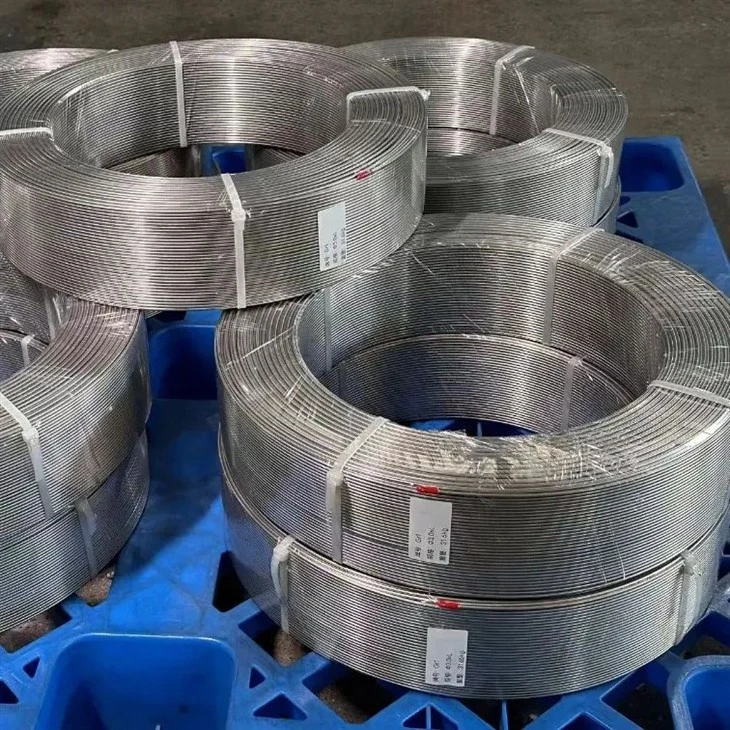
GR12 Titanium Wire Rod is another alloyed titanium grade that contains molybdenum and nickel. It offers improved creep resistance and corrosion resistance compared to GR.1 Titanium, making it suitable for more demanding applications in the chemical and petrochemical industries.
GR5 Titanium Wire Rod, also known as Ti - 6Al - 4V, is one of the most widely used titanium alloys. It has excellent strength - to - weight ratio and good creep resistance at elevated temperatures. In applications where high strength and creep resistance are required, GR5 Titanium may be a better choice than GR.1 Titanium.
Conclusion
In conclusion, the creep resistance of GR.1 Titanium Wire Rod is a complex property that is influenced by factors such as temperature, stress, and time. While it may not have the highest creep resistance compared to some alloyed titanium grades, its combination of good creep resistance, excellent corrosion resistance, and high ductility makes it a versatile material for a wide range of applications.
As a supplier of GR.1 Titanium Wire Rod, I understand the importance of providing high - quality products that meet the specific requirements of our customers. Whether you are in the aerospace, chemical processing, or medical industry, our GR.1 Titanium Wire Rod can offer the performance and reliability you need. If you are interested in learning more about our GR.1 Titanium Wire Rod or have specific requirements for your application, please feel free to reach out to us for a detailed discussion and potential purchase. We are committed to providing you with the best solutions and ensuring your satisfaction.
References
- Callister, W. D., & Rethwisch, D. G. (2018). Materials Science and Engineering: An Introduction. Wiley.
- Schaffer, G. B., Wegst, U. G. K., & Ashby, M. F. (2016). Engineering Materials 1: An Introduction to Properties, Applications and Design. Elsevier.
- Boyer, R., Welsch, G., & Collings, E. W. (1994). Materials Properties Handbook: Titanium Alloys. ASM International.


