

Cold working is a process that involves deforming a material at a temperature below its recrystallization temperature. This process can significantly alter the mechanical properties of metals, including hardness. As a supplier of ASTM F136 GR.23 Titanium Bar, I have witnessed firsthand the impact of cold working on this particular grade of titanium. In this blog, we will explore the effects of cold working on the hardness of ASTM F136 GR.23 Titanium Bar and its implications for various applications.
Understanding ASTM F136 GR.23 Titanium Bar
ASTM F136 GR.23 Titanium Bar is a specific grade of titanium alloy known for its excellent biocompatibility, high strength-to-weight ratio, and corrosion resistance. It is primarily used in medical applications, such as orthopedic implants and dental fixtures, due to its ability to integrate well with the human body. The alloy consists mainly of titanium, with small amounts of aluminum and vanadium, which contribute to its unique properties.

The Process of Cold Working
Cold working can be achieved through various methods, including rolling, drawing, and forging. During cold working, the metal is subjected to plastic deformation, which causes the grains within the material to become elongated and distorted. This deformation leads to an increase in the number of dislocations within the crystal lattice, which in turn increases the resistance to further deformation. As a result, the hardness of the material increases.
Effect of Cold Working on Hardness
The hardness of ASTM F136 GR.23 Titanium Bar can be significantly affected by cold working. As the degree of cold work increases, the hardness of the material also increases. This is because the plastic deformation caused by cold working disrupts the regular arrangement of atoms in the crystal lattice, making it more difficult for dislocations to move. The increased resistance to dislocation movement results in a harder and stronger material.
However, it is important to note that there is a limit to the amount of cold work that can be applied to the material. Excessive cold working can lead to the formation of cracks and other defects, which can compromise the integrity of the material. Therefore, it is crucial to carefully control the degree of cold work to achieve the desired hardness without sacrificing the material's ductility and toughness.
Implications for Medical Applications
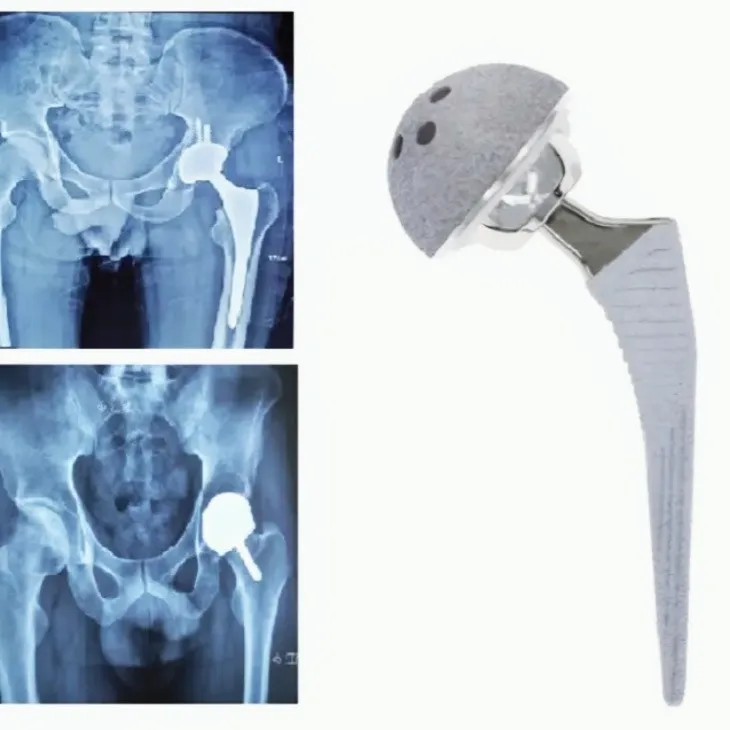
The increased hardness of cold-worked ASTM F136 GR.23 Titanium Bar can have several implications for medical applications. In orthopedic implants, for example, a harder material can provide better wear resistance, which can extend the lifespan of the implant. This is particularly important in applications where the implant is subjected to high levels of stress and friction, such as in hip and knee replacements.
In dental applications, the hardness of the titanium bar can also play a crucial role. Durable Dental Support Titanium Rods require a certain level of hardness to withstand the forces exerted during chewing and biting. Cold working can help to achieve the desired hardness, ensuring the long-term stability and functionality of the dental implant.
Other Applications
In addition to medical applications, ASTM F136 GR.23 Titanium Bar is also used in other industries, such as aerospace and automotive. In aerospace applications, the high strength-to-weight ratio and corrosion resistance of the alloy make it an ideal choice for components such as aircraft frames and engine parts. Cold working can further enhance the mechanical properties of the material, making it even more suitable for these demanding applications.
In the automotive industry, ASTM F136 GR.23 Titanium Bar can be used in high-performance components, such as connecting rods and valves. The increased hardness and strength provided by cold working can improve the performance and reliability of these components, leading to better overall vehicle performance.
Controlling Cold Working for Optimal Properties
To achieve the optimal hardness and other mechanical properties of ASTM F136 GR.23 Titanium Bar, it is essential to carefully control the cold working process. This includes selecting the appropriate cold working method, determining the degree of cold work, and controlling the temperature and strain rate during the process.
In addition, post-cold working heat treatment may be required to relieve internal stresses and improve the material's ductility and toughness. This can involve annealing the material at a specific temperature for a certain period of time to allow the grains to recrystallize and the dislocations to rearrange.
Conclusion
Cold working has a significant effect on the hardness of ASTM F136 GR.23 Titanium Bar. By carefully controlling the cold working process, it is possible to achieve the desired hardness and other mechanical properties, making the material suitable for a wide range of applications, particularly in the medical, aerospace, and automotive industries.
If you are interested in learning more about ASTM F136 GR.23 Titanium Bar or are looking for a reliable supplier for your specific application, please feel free to contact us. We are committed to providing high-quality titanium bars and excellent customer service. Whether you need Femur Prosthetic Replacement Titanium Rod for orthopedic applications or Titanium TI-6AI-4V For Artificial Femoral Head Replacement for dental use, we have the expertise and resources to meet your needs. Let's start a conversation about your project and how we can assist you.
References
- ASM Handbook Volume 2: Properties and Selection: Nonferrous Alloys and Special-Purpose Materials. ASM International.
- Titanium Alloys: Fundamentals and Applications. Edited by David E. Alexander, David L. Anton, and William C. Gibbons. John Wiley & Sons.
- ASTM International Standards for Titanium and Titanium Alloys. ASTM International.


