

Elongation is a crucial mechanical property that reflects the ability of a material to deform plastically before breaking under tensile stress. When it comes to GR.2 Titanium Wire, understanding its elongation is essential for various applications, from aerospace components to medical devices. As a supplier of GR.2 Titanium Wire, I am well - versed in the details of this property and its implications.
Understanding Elongation
Elongation is typically expressed as a percentage and is determined through a tensile test. In this test, a sample of the GR.2 Titanium Wire is gradually pulled until it breaks. The difference in length between the original sample and the elongated sample at the point of fracture, divided by the original length and multiplied by 100, gives the elongation percentage.
For GR.2 Titanium Wire, the elongation value is influenced by several factors. Firstly, the chemical composition of the titanium alloy plays a significant role. GR.2 titanium is an unalloyed titanium grade, mainly composed of titanium with small amounts of iron, oxygen, carbon, nitrogen, and hydrogen. Even minor variations in the content of these elements can affect the wire's ductility and, consequently, its elongation.
Secondly, the manufacturing process has a profound impact on the elongation of GR.2 Titanium Wire. Processes such as hot rolling, cold drawing, and annealing can alter the microstructure of the wire. For example, cold drawing can increase the strength of the wire but may reduce its elongation if not followed by proper annealing. Annealing helps to relieve internal stresses and restore the ductility of the wire, thereby improving its elongation.
Typical Elongation Values for GR.2 Titanium Wire
In general, GR.2 Titanium Wire has good ductility, which is reflected in its relatively high elongation values. According to industry standards, the minimum elongation for GR.2 Titanium Wire is often specified as around 20 - 30% in a standard tensile test. However, in practice, well - manufactured GR.2 Titanium Wire can achieve elongation values of up to 40% or even higher in some cases.
These high elongation values make GR.2 Titanium Wire suitable for applications where the wire needs to be bent, formed, or stretched without breaking. For instance, in the jewelry industry, GR.2 Titanium Wire can be easily shaped into various intricate designs due to its excellent ductility. In the medical field, it can be used for making orthodontic wires, where the ability to be bent and adjusted without fracturing is crucial.
Comparison with Other Titanium Grades
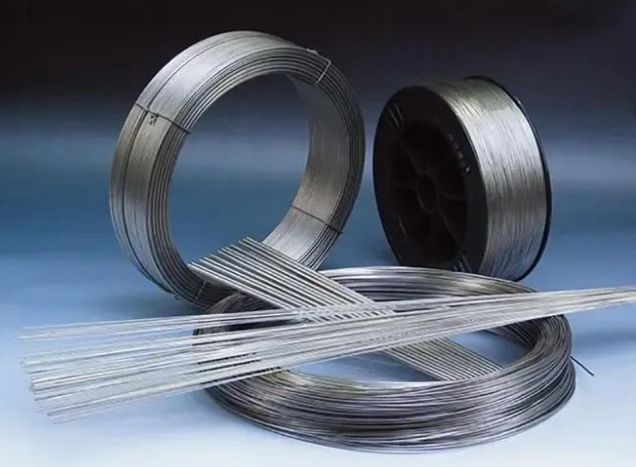
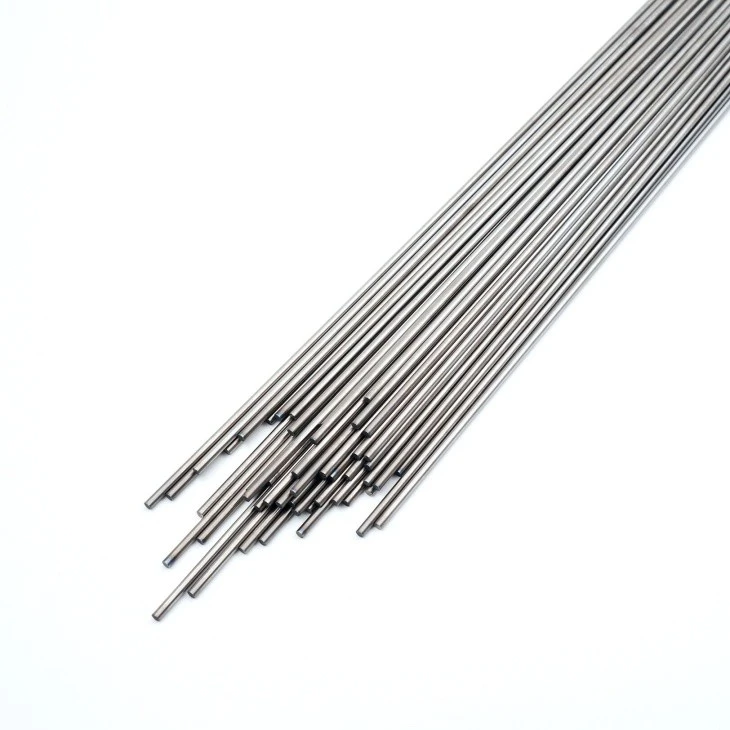
When comparing the elongation of GR.2 Titanium Wire with other titanium grades, it's important to note the differences in their properties. For example, GR12 Titanium Wire Rod is an alloyed titanium grade that contains molybdenum and nickel. This alloying generally results in higher strength but lower elongation compared to GR.2. The addition of alloying elements changes the crystal structure of the titanium, making it more resistant to deformation but less ductile.
On the other hand, GR5 Titanium Wire Rod, also known as Ti - 6Al - 4V, is a high - strength titanium alloy widely used in aerospace applications. While GR5 offers excellent strength - to - weight ratio, its elongation is typically lower than that of GR.2. The presence of aluminum and vanadium in GR5 enhances its strength but restricts its ability to deform plastically.
Importance of Elongation in Different Applications
In the aerospace industry, GR.2 Titanium Wire's elongation is of great significance. Although it may not be as strong as some other titanium alloys, its good ductility allows it to be used in applications where the wire may be subjected to dynamic loads or vibrations. For example, it can be used for wiring harnesses or in some secondary structural components where the ability to withstand small amounts of deformation without failure is crucial.
In the medical field, the high elongation of GR.2 Titanium Wire makes it an ideal material for surgical sutures and orthopedic implants. Surgical sutures need to be able to be tied tightly and withstand the movement of tissues without breaking. Orthopedic implants, such as bone plates and screws made from GR.2 Titanium Wire, need to be able to adapt to the natural movement of the bones without fracturing.
In the electronics industry, GR.2 Titanium Wire's elongation is beneficial for making electrical contacts and connectors. The wire can be easily formed into the required shapes, and its ability to withstand some deformation during assembly and use ensures reliable electrical connections.
Quality Control and Elongation
As a supplier of GR.2 Titanium Wire, we place great emphasis on quality control to ensure that our wire meets the required elongation standards. We conduct regular tensile tests on our products to verify their mechanical properties. Our manufacturing process is carefully monitored to ensure that the wire's microstructure is optimized for maximum elongation.
We also work closely with our customers to understand their specific requirements for elongation. For some applications, a higher elongation may be preferred, while for others, a balance between strength and elongation may be necessary. By providing detailed technical data and guidance, we help our customers select the most suitable GR.2 Titanium Wire for their applications.
Conclusion
The elongation of GR.2 Titanium Wire is a key property that determines its suitability for a wide range of applications. Its relatively high elongation, combined with its good corrosion resistance and biocompatibility, makes it a popular choice in many industries. Whether you are in the aerospace, medical, electronics, or jewelry industry, understanding the elongation of GR.2 Titanium Wire is essential for making informed decisions about material selection.
If you are interested in purchasing GR.2 Titanium Wire or have any questions about its properties, including elongation, please feel free to contact us. We are more than happy to assist you in finding the right solution for your specific needs.
References
- ASM Handbook Volume 2: Properties and Selection: Nonferrous Alloys and Special - Purpose Materials. ASM International.
- Titanium: A Technical Guide, Second Edition. Don Eylon, William F. Boyer, and David A. Koss. ASM International.
- ASTM B338 Standard Specification for Seamless and Welded Titanium and Titanium - Alloy Tubes for Condensers and Heat Exchangers. ASTM International.


