

Hey there! As a titanium wire supplier, I often get asked about various properties of titanium wire, and one question that pops up quite a bit is, "What is the specific heat capacity of titanium wire?" Well, let's dive right into it.
First off, let's understand what specific heat capacity means. In simple terms, specific heat capacity is the amount of heat energy required to raise the temperature of a unit mass of a substance by one degree Celsius (or one Kelvin). It's like how much fuel you need to heat up a certain amount of something.
For titanium wire, the specific heat capacity typically falls around 0.523 J/(g·K) at room temperature. This value can vary slightly depending on factors like the purity of the titanium, its alloy composition, and the manufacturing process.
Titanium is a pretty amazing metal. It's strong, lightweight, and corrosion - resistant. These properties make titanium wire a popular choice in a wide range of industries. For example, in the aerospace industry, titanium wire is used in aircraft components. The specific heat capacity plays a crucial role here. When an aircraft is in flight, it experiences rapid changes in temperature. The specific heat capacity of titanium wire helps it handle these temperature changes without significant deformation or damage.
Another industry where titanium wire shines is the medical field. Medical Titanium Wire is used in surgical instruments, dental implants, and even in some cases, in pacemakers. The specific heat capacity of titanium wire is important in medical applications because it needs to be biocompatible and able to withstand the body's internal temperature. The relatively low specific heat capacity of titanium means that it can quickly reach and maintain the body's temperature, which is essential for the proper functioning of medical devices.
Now, let's talk about different grades of titanium wire. We offer GR12 Titanium Wire Rod and GR5 Titanium Wire Rod. GR5, also known as Ti - 6Al - 4V, is one of the most commonly used titanium alloys. It has excellent strength - to - weight ratio and is widely used in aerospace, automotive, and marine applications. The specific heat capacity of GR5 titanium wire is similar to that of pure titanium but can be slightly different due to the presence of aluminum and vanadium.

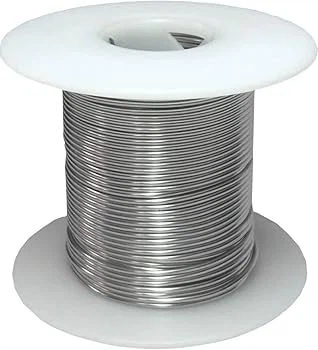
GR12 titanium wire, on the other hand, contains molybdenum and nickel. This alloy has good corrosion resistance and is often used in chemical processing and marine environments. The specific heat capacity of GR12 titanium wire is also in the ballpark of the general titanium specific heat capacity, but again, the alloying elements can cause some minor variations.
When it comes to manufacturing titanium wire, the specific heat capacity affects the production process. During the heating and cooling stages of wire drawing, annealing, and other manufacturing steps, the specific heat capacity determines how much energy is needed to heat the wire to the required temperature and how quickly it cools down. This knowledge is crucial for ensuring the quality and consistency of the final product.
If you're in an industry that requires titanium wire, understanding its specific heat capacity can help you make better decisions. For example, if you're working on a project where there will be significant temperature fluctuations, you need to choose a titanium wire with the appropriate specific heat capacity to ensure the longevity and performance of your product.
We take pride in being a reliable titanium wire supplier. Our team of experts can help you select the right grade of titanium wire based on your specific requirements, including the specific heat capacity. Whether you need a small quantity for a research project or a large - scale order for an industrial application, we've got you covered.
If you're interested in learning more about our titanium wire products or have any questions regarding specific heat capacity or other properties, don't hesitate to reach out. We're always here to have a chat and help you find the perfect titanium wire solution for your needs. Let's start a conversation and see how we can work together to make your project a success.
References
- "Titanium: A Technical Guide" by John C. Williams
- Various industry reports on titanium applications and properties


