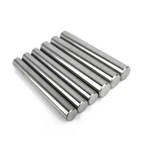
Titanium fastener properties
Strength and durability
Corrosion resistance
High temperature performance
Copper Fastener Properties
Electrical Conductivity
Copper is known for its excellent electrical and thermal conductivity. This property makes copper fasteners suitable for applications where heat dissipation is critical, such as electrical components and heat exchangers. However, this conductivity can also be a disadvantage in high-temperature applications because copper softens and loses strength when exposed to extreme heat. Copper fasteners may have an advantage in situations where rapid heat transfer is required, but their performance degrades significantly as temperatures increase, leading to potential failure. This dual conductivity of copper requires careful consideration when selecting fasteners for a specific application.
Ductility and Forgeability
Copper fasteners are softer and more ductile than titanium. This ductility makes installation easier and allows them to absorb shock loads. The flexibility of copper fasteners is useful in applications where components may experience vibration or dynamic loads. However, this softness can also lead to deformation under high stress conditions, which is a significant disadvantage in high-temperature environments. In applications where tight tolerances and structural integrity are critical, the use of copper fasteners may present risks that need to be carefully evaluated.
Temperature Limitations
While copper can withstand moderate temperatures, it has a lower melting point than titanium. Copper fasteners typically perform well up to 400°F (204°C) before they begin to lose mechanical properties. Above this temperature, copper becomes weak and susceptible to failure. This limitation makes copper fasteners less suitable for high-temperature applications, as the risk of failure could have catastrophic consequences. Engineers must consider these temperature limitations when designing systems that operate in extreme conditions.

Comparison of Titanium and Copper Fasteners
Performance in High-Temperature Applications
When comparing titanium and copper fasteners in high-temperature applications, titanium significantly outperforms copper. Titanium's ability to maintain strength and integrity at high temperatures makes it the best choice for critical applications. In contrast, copper's performance degrades significantly as temperature increases, leading to potential failure. This performance difference is particularly important in industries such as aerospace and military, where the reliability of fasteners can directly impact safety and operational success.
Weight Considerations
Titanium's lightweight properties are another advantage it offers over copper. In weight-critical industries such as aerospace, the use of titanium fasteners can result in significant weight savings without compromising strength. This is especially important in applications where every ounce counts, as reduced weight can improve fuel efficiency and overall performance. The combination of strength and lightness makes titanium an attractive option for manufacturers to optimize designs and improve product performance.
Cost Factors
While titanium fasteners offer many advantages, they are generally more expensive than copper fasteners. Titanium's higher cost is often driven by its superior performance and service life, especially in high-temperature applications where failure could have catastrophic consequences. Manufacturers must weigh the initial investment against the long-term benefits of using titanium fasteners, including reduced maintenance costs and increased reliability. In many cases, the higher upfront cost of titanium is offset by its durability and performance, making it an affordable choice in the long run.

Conclusion
In summary, while both titanium and copper fasteners have their unique advantages, titanium fasteners clearly outperform copper fasteners in high-temperature applications. Titanium's superior strength, durability, and corrosion resistance make it the material of choice for critical applications in the aerospace, automotive, and chemical processing industries. While titanium fasteners cost more, their long-term performance and reliability justify the investment. As industries continue to evolve and require more advanced materials, titanium fasteners will play a key role in ensuring safety and efficiency in a variety of applications.